Sunday, November 9, 2014

Nobility and Honor: the similarities of Harry Potter and Ned Stark

The genre of fantasy is one that often bleeds stories into one another. There are always influences, references, and similarities to be gathered. The work that has greatly pulled from all realms of literature is Harry Potter. The young wizard series shows links to Tolkien, Austen, Dickens, and many other famous authors. But one series the public is generally certain that Potter did not borrow from is A Song of Ice and Fire by George R. R. Martin. Despite this fact, it is safe to say that both series can be seen as similar. Of course there are big and obvious differences as well but I have always viewed A Song of Ice and Fire being the next step after Potter. Not only is the writing more mature and intricate but so is the story and the characters. After reading the Potter series six times and Ice and Fire once, I noticed a similarity in lead character Harry and the beloved Ned Stark. Ned Stark, the Hand of King Robert Baratheon in the first installment titled A Game of Thrones, is known for his unmoving honor and nobility. He is always striving to do the right thing while not having any motive other than...well, doing the right thing. He never does anything for himself but serves to be a guiding light when others wander. Some may also call this stupidity. I call it believing in something bigger than ones own self interests. An example of Ned's honor is when he...chops off the deserted ranger's head. I know that sounds kind of weird but here is why I use this as an example. Ned brings his young son Bran to watch the beheading and he tells Bran that the reason he specifically was called to do such an act is because the man who passes the sentence must swing the sword. Ned helped keep said laws in check and therefore he must enforce them. He has an honor code and sticks to it.
Ice and Fire is very character driven while Potter is very plot driven so in Potter there is room for redeemable choices...meaning if a character makes a noble choice, something noble will come out of it. In Ice and Fire, Ned's choices have dire consequences and his honorable choice to not take action after Robert's death and claim Stannis as the rightful King proves fatal to many. Even when he makes the right choice, it isn't right for the realm.
Meanwhile, young Harry is having a lesson in ethics throughout his coming of age at Hogwarts. When he honorably lets Peter Pettigrew live is Prisoner of Azkaban, he is later returned the favor when Peter cannot kill him in the cellar of Malfoy Manor. Harry also shows his nobility when he uses expelliarmus. He uses this elementary spell on many life threatening occasions and always comes out relatively unscathed. When he uses it in the sky trying to escape from Privet Drive in Deathly Hallows, the Death Eaters immediately know it is him because of his honor to not kill or maim anyone. After this, Lupin criticizes Harry on his failure to act (and I have a feeling A Game of Thrones readers were to Lupin as Ned was to Harry). But Harry is unwavering. 
The two characters are also very internal. Rarely do either of them voice their deepest thoughts and are very reflective on their actions and the effect their actions have on how future events will unfold. A great example of Harry's internal dialogue with himself is in Deathly Hallows when he struggles with feeling alone amidst Ron and Hermione when he struggles with the idea to trust Dumbledore or not. Ned Stark also internalizes a lot and when he needs to think, he goes to the heart tree and prays to the Old Gods. To link back to Potter, many of Harry's thoughts in Deathly Hallows are like a prayer. This is especially apparent after Harry buries Dobby and is at shell cottage when he reflects, "is that why you [Dumbledore] made it so difficult? To give me time to work it out?"
Harry's adolescence very much echoes Ned Stark and I think it is safe to say he gives us a good picture of what Ned would have been like in his younger years.

Friday, October 31, 2014

Life of Pi by Yann Martel

There are some books that you know you are going to love the moment you lay eyes on them. This is a rare occurrence but when it happens, it is very supernatural. Life of Pi was one of these magical books. I first heard of it from school when some kids had to read it over summer vacation. I've always enjoyed my summer reading books and while I enjoyed All Quiet on the Western Front, I really wished I had been assigned Life of Pi to read before sophomore year. A few years later I bought the book used and let it sit on my bookshelf way longer than I should have. After finally reading it, I'm sorry I waited so long. 
Life of Pi is about a boy named Piscine Patel. When kids make fun of him by calling him "Pissing", he takes a stand and gives himself a nickname: Pi. Three point one four. Pi's father owns a zoo and he himself is a big supporter of zoo's and makes a very valid case for them throughout the book. Pi is also unique in that he is raised Hindu and takes on Christianity and Islam later (though still a young boy). When Pi's family decides to move the zoo to Canada, their ship sinks and Pi is the only survivor on a life boat along with an orangutang, a hyena, a zebra, and a Bengal Tiger named Richard Parker. Pi's sea adventure is what takes up three quarters of this book.
The premise of this story is a very simple one - boy and tiger are stranded in the middle of the ocean and must survive. Critics say it is a book that will make you believe in the power of fiction and there are even some who dare to say this book will make you believe in God. The book carries a very delicate innocence yet also invests in exposing the raw and messy side of faith and life. The author leaves a lot of room by the end for the reader to be involved and decide their own interpretation which I really loved. The book also insists upon making the distinction between humans and animals which is a very interesting idea to read about. The story was well paced and the details were incredible. Pi himself is a wonderful character and I found I could stick behind him no matter what. Martel is an excellent storyteller and author and he kept me heavily invested in the story. 
This was definitely the best book I have read all year thus far. I rate it 5 out of 5 stars and highly recommend it!

Saturday, October 25, 2014

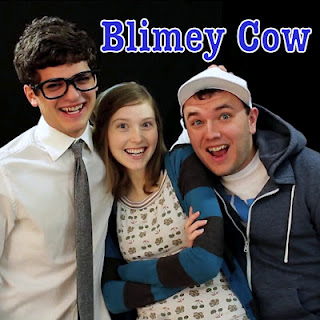
Blimey Cow, Fandoms, and Human Complexity

"But at least it's just a kid thing, right? At least people grow out of this behavior when they get older. Adults don't join groups and justify the actions of the members of said groups no matter how insane or even criminal they are. Oh wait, I just described politics. Well kids have fun with your fandoms. Apparently it's just practice for the real thing."


This is how Blimey Cow ends one of their videos from the past month titled "The Fandom Menace (Or: Why I Hate Fandoms)". The video was a bit hard to watch. Not only did many fans and casual viewers hate the video but I myself found it hit very close to home. I'm not a huge fangirl but I won't lie when I say I do many of the things presented in this video, both on the fan side and the outsider. I constantly push Harry Potter on people yet also refuse to watch Dr. Who because of how insane the fans are about it. In a way, I'm glad Blimey Cow brought up the issue of fandoms while also calling me out. They always seem to do that which is why I admire them and have been a long time subscriber.
But the video did more than call people out and make some even feel alienated. It brought up an important truth about fandoms that surrounds the extreme admiration of individual people. This I am glad to say I have put behind me. Sure I still greatly admire certain folks but I no longer obsess unhealthily over them. Blimey Cow dared to go the distance and compared fandoms to politics. This is when the video takes a dark turn and the satire is just so damn good.
How have we failed to recognize this as a culture? Perhaps we did but the thoughts couldn't quite formulate properly in our brains. Perhaps we did but didn't want to admit it. Either way, it has been brought to our attention now in a very uncomfortable way and we must ask - where do we go after watching said video?
I think it is important to see all sides to the connection Blimey Cow made. They connect fandoms to politics but what is it about politics that gives a negative connotation? From my experience, I'd say it is the in-authenticity that bothers people about politics. No politician is ever straight faced with the public it seems. They all skew the truth or hide it. And when it leaks, people freak out. Politicians do bad things because their power allows them to do so and like many people, they may imagine getting caught but don't believe it could possibly happen. How does this connect with fandoms? Well, aside from the quote at the beginning, it allows the said individual who is idolized to get away with much more than a normal person would be allowed. Take Taylor Swift for example. Many of her songs are extremely hateful and could easily come across as bullying and targeting. Yet she is another American sweetheart for some reason. People quote her lyrics biblically and she is not the first nor the last person to be treated as an idol. Even sports stars get special treatment. Take O.J. Simpson for example...I don't think I need to say anything more.
In a way, we are all part of fandoms. We all tend to idolize people for their virtues but fail to see them as...well, people. Flawed people. It isn't the fandom itself that is the problem because fandoms bring people together and allow them to feel accepted. It is the idea of the fandoms that are troubling. The idea that someone has their room covered in One Direction photos so they can kiss the guys to bed and has internet debates about the validity of One Direction song lyrics and watches nothing else but One Direction on the family room television isn't healthy and is also a bit stalker-ish. Those guys aren't perfect and neither is the President (or any politician for that matter), Taylor Swift, O.J. Simpson, or any person in the public eye. I think it is great to celebrate talent and goodness, but we must realize that human complexity is much stronger than the faces people put on for the cameras. 


Tuesday, September 30, 2014

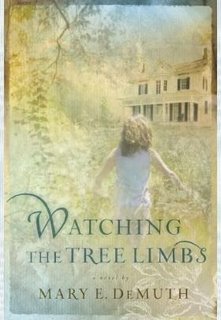
Watching the Tree Limbs by Mary DeMuth

I stumbled upon Watching the Tree Limbs by Mary DeMuth in an attempt to find a good "Christian" novel that was also literary. This book popped up on Google so I bought it. This was a few years ago when I was really desperate to find a book that came from a Christian worldview that was also written well and not shoving beliefs down the readers throat. It took me a long time to pick it up but I finally got to reading it.
When I first started reading this book, I really didn't like it. For some reason that I couldn't quite comprehend, I wanted to stop reading the book altogether. Part of me wondered if it was the graphic nature of the story but I'm not usually bothered by that sort of thing. The main character, Mara, is raped not even ten pages into the novel. DeMuth goes into great detail and I did feel a bit turned off but that didn't explain why I wanted to stop reading when all of it was said and done. I have since realized as I read on that it was the writing style that was a turn off. DeMuth is in no way a bad writer but her style made me feel nostalgia toward another writer and that writer was...well, my 17 year old self. Halfway through the book I was suddenly reminded of my writing style in high school since I wrote almost every day in study hall. If I had read this book back then, I bet I would have considered it a favorite. Now I'm not one to say you can't read a book that is below your age level...I'm actually very much against people accusing children's literature as being simple. However, I was a bit turned off by this realization.
As I said above, the book begins with our nine year old protagonist Mara being raped by a high school student, with a John Deer hat, nicknamed General. The book revolves around Mara's psychology after this incident as well as Mara's family history that she knows nothing about.
This book was a quicker read than expected. I became very engrossed in Mara's family mystery and desperately awaited the reveal to the community that General had been rapping Mara. The build up was excellent. The book surprisingly moved at a fast paced mixed with the slow nature of the story. I also had a bit of fun toward the end of the book when I began to guess outcomes and tried to figure out the ending based on clues given by characters and literary techniques that the author set up.
However, despite my enjoyment there was a huge low to this novel. While the book does an excellent job at keeping the reader invested and DeMuth perfectly illustrates Mara's psychology, the ending was a huge disaster. I don't mean it was a disaster in terms of the outcome; I mean disaster in terms of the ending execution. The entire novel drags the reader along wondering who Mara's family is and when will General's true identity be exposed. 320 pages out of the 346 sets this up! And all we get are simple info dumps and cliche moments. This technique isn't always bad. Harry Potter books often have info dumps at the end. But the big difference between this book and the Harry Potter books is that Harry Potter is fast paced and has tons and tons of explanations to give that the info dumps, while a tad bit on the easy side by the author, work. The ending of Watching the Tree Limbs was way too fast compared to what was set up. I would have liked to see Mara find out about her past in intervals over time, not in super small bits that don't make sense and then one huge info dump. Another problem I found was that DeMuth spent more time on a passage about Mara accepting Jesus (a passage I didn't quite understand) than on the real issues she set up to be resolved. In fact, this type of scene is what I was avoiding. It took the book from interesting mystery to cliche Christian stereotype. Mara's struggles throughout the novel were General, her past, and struggling with her own goodness. Yes Mara struggled with her faith but this book treated it as once Mara accepted Jesus, everything suddenly worked out and that is a very wrong and damaging tween idea of God. Finding faith doesn't mean our problems disappear. The climax became Mara accepting Christ instead of focusing on what the book had set up so nicely. In my opinion, many "Christian" books fall for this trap and this is why so many aren't considered literary. They are essentially Christian propaganda. 
Another big disappointment was Mr. Winningham. He has no character development what-so-ever yet DeMuth makes him a big part of the story. The book asks us to sympathize with him and while his back story helped with that, his character didn't give me any signs that I would like him. He never grew from this experience that he was going through. He should have been given more of a part to play in the present than simply playing a huge role in the past. 
Overall, this book was enjoyable. It wasn't exactly a stellar read but it was a good read. I would recommend it purely on the basis that Mara's character development is fantastically done. My rating is 3 out of 5 stars.

Monday, September 22, 2014

Housekeeping by Marilynne Robinson

I read Marilynne Robinson's Gilead and studied it in college. Recently I have come in contact with several passages from the book and have fallen in love with the beautiful language and writing style. It occured to me that I should read another of Robinson's books to relive her excellence. Housekeeping certainly lived up to my high expectations.
The book is narrated by Ruthie, a quiet and contently lonely person. She is raised alongside her sister Lucille by a succession of relatives in Fingerbone, Idaho. Their house sits by a large glacial lake and above the lake are train tracks, the same tracks where their grandfather died in a train wreck. After their mother commits suicide by driving off into the same lake, their grandmother takes care of them. After her death they are raised by their two Aunts before Aunt Sylvie arrives and becomes their final guardian.
The title of this book is simply beautiful. When the book was first published it was said to be a feminist novel but I never got this impression at all. Part of me feels like when there is a story that consists entirely of female characters, it is automatically dubbed to be a feminist work. Not true. Obviously, housekeeping is a very traditional act that women, in the early 1900's and for as long as history can recall, have been taking part in. It is the act of making ones living space presentable and homely. In the case of this book, the title also talks about housekeeping on a deeper level, of rebuilding ones soul and keeping up a spiritual home for ones soul.
The theme of loneliness was also a wonderful aspect of this novel. Ruth is constantly lonely and her experiences and descriptions completely personify what it means to be lonely and why some people suffer from it.
Robinson has a beautiful way of tying literature with theology. What was by far my biggest take away from this book was Robinson's uncanny way of looking at the Bible as a story instead of merely a book of rules to follow. She refers to several areas of the Bible externally and also internally, specifically Ruth's name and her ties to the book of Ruth. The quality of her words is like eating the most gourmet, delicious food. She never ceases to satisfy.
To finalize this review I also want to touch on the ambiguity of the ending. This trope is one that I never grow tired of because it's interactive nature literally invites the reader to finish the story. It is truly beautiful.
Obviously I love this book. It was a quick and immensely enjoyable read. I will give it 5 out of 5 stars. Robinson is quickly becoming my favorite author!

Friday, September 5, 2014

The Assassination of Jesse James by the Coward Robert Ford by Ron Hansen

I didn’t know much about Jesse James. When I heard his name, I would think of the wild west and bank robberies and Billy the Kid. That was the extent of my knowledge before reading this book. I am not a historical reader. Don’t get me wrong, I love history. But I think history is more interesting for me when it is visual. I realize this trait is feeble. I went into this book hoping for the best but expecting something that would bore me to death. Essentially my expectations were correct…and at the same time, I came to realize that this book is not getting the credit it deserves.
What do I mean by that? To put it simply, this novel in its brilliance was boring. When I first began reading I found the characters and situations to be fascinating. Ron Hansen is a brilliant writer. His characterizations and descriptions resemble that of classic novelists such as John Steinbeck. In fact I was reminded of Steinbeck while reading and upon looking over the rave reviews for this book in the inside cover I saw that someone else made the same connection. Because of this comparison and Hansen’s brilliant writing, I find it odd that this book isn’t required reading in classrooms.  I think that if I had to read this book again then I would only do it if I was taking a class on it. Taking a class would help me understand the story more. I think this was one of the issues with the text while I was reading. I don’t want to say issue holds the book back but it will hold back certain readers, me being one of them. At its heart, this book is about Jesse James and his gang and gang stories are always formatted a certain way that confuses the heck out of me. For example, I recently watched a movie called American Hustle and I could not grasp the plot for the life of me. Yeah, I’m that bad. It was about a con-man and also mixed the mafia into the picture with confusing deals which kept me from enjoying the film and therefore understanding the film. Obviously this is a fault of my own intellect but I have a hard time enjoying a story when I can’t comprehend half of it. This was a major downfall for me as a reader.
The writing, as I said, was incredible. Hansen is slowly but surely becoming one of my favorite writers as I really enjoyed his other novel, Mariette in Ecstasy. While the story went over my head, the writing did not. If my rating was based on the writing alone, this would be a five star review. The psychological study on the relationship between Jesse James and Bob Ford is also enough to give this book five stars. The book’s title is really not the focus of the novel but the climax. A big theme the book tackles is fame in America and the obsessive nature in which people treat the rich and famous. This theme came across the most in the final part of the novel after Jesse’s death.
Overall, this book clashed for me between the excellent themes and writing style versus my lack of understanding con-men stories. I still feel really silly saying that. Toward the end of the novel I was so ready to be done and move on and I just felt bitter about the experience. So I will give this book 3 out of 5 stars.

Wednesday, August 27, 2014

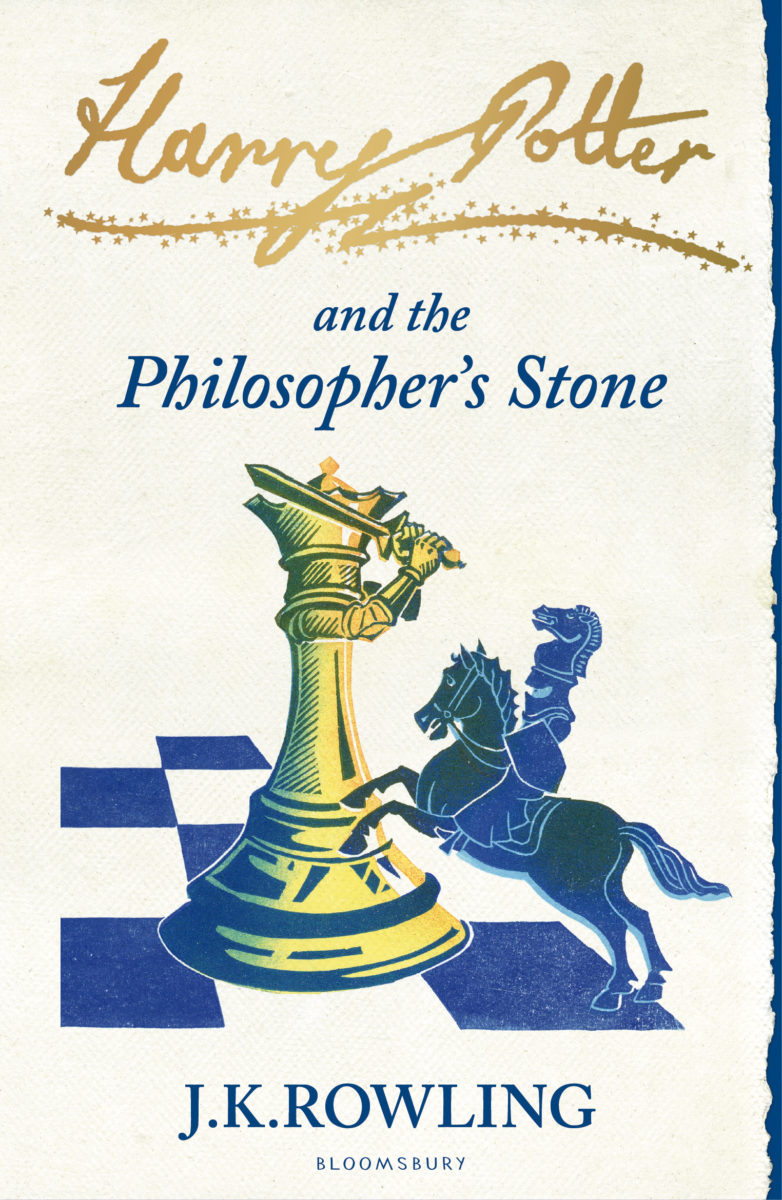
Harry Potter and the Philosopher’s Stone Reflection


When I was nine years old, Harry Potter was a growing phenomenon. Kids were going crazy for these books. I can still remember sitting with my friends at lunch time and laughing about how stupid it all was. I mean, c’mon. Who wants to read a book about a boy wizard? It seemed ridiculous.
Now it is almost 15 years later and I have just finished reading the first book for the seventh time. To some that may seem like a real accomplishment. To others it may seem like a small number compared to the number of times they have read it. And to the select few buzz kills, they think it is a waste of time. You know who you are.
Yes, I have read Harry Potter and the Philosopher’s Stone seven times (I now refuse to call it “Sorcerer’s” for reasons I will explain further along in this post). I began rereading the Harry Potter books in my sophomore year of high school, 2006. I reread them because I found I hardly remembered the books and was only accustomed to the movies. I reread the first three and didn’t return to them until the summer of 2009, two years after I read the seventh book, and the summer the sixth film released. Ever since that second reread, I have become acquainted to a specific feeling that only resonates when I read Harry Potter. If you are a reader than I am sure you know what I mean. It is a weird and specific feeling you get when you read a book that sometimes haunts you until you read the book again. For me, the urge to reread Harry Potter and relive that marvelous feeling comes about every summer. I kid you not. Sometimes the feeling is so strong that I crave the books like an ex-smoker craves a cigarette. I can’t really explain the feelings even to myself. Perhaps it is returning to my childhood that keeps me coming back, remembering the touch of the pages in my small hands and the smell of pumpkin space candles burning in autumn while the smell of burning leaves drifted through the open window. Sometimes I am brought back to the summer when the final book came out. My friends brought their copy to church camp in secret and when I finally ended up reading it, I was at my grandfather’s 100+ year old house in upstate New York.
Books have a way of staying with us. My mom asked me why I like to reread books when I already know what is going to happen. I explained to her that rereading is just as magical. I am able to spot clues that foreshadow to the book’s ending or even foreshadow future book events. I can look at character development and see how Rowling set up the trio to become the adults at the end of book seven. Rereading allows me to reread brilliant one liners from Dumbledore (and this book contains a lot of those) and relive the trio’s friendship in bloom. It is like reuniting with a friend who has moved away and now returned for a few weeks.
I contemplated writing another review for this book (which seemed appropriate since my views have changed on certain things) but felt it would be counterproductive. I’ve read the book seven times after all…it is no secret I love it. So instead of reviewing the book, I am going to talk about the memories I associate with reading the first book for the first time. This will be an ongoing series. The number seven is a prominent number in the Harry Potter series so it seems fitting to reminisce on this reread. This time around I won’t be rereading the books all at once. There are so many books that I haven’t read yet that I want to give a chance so I will reread at my own pace. Let the magic begin!
I want to first discuss the title. It really bothers me that Scholastic felt the need to change Philosopher’s Stone to Sorcerer’s Stone. Not only are these two things very different, but the American name no longer carries as much intellect and weight. To some this may seem like a minuscule detail but in terms of Nicholas Flammel and what his title was, he was a philosopher and there was said to be a Philosopher’s Stone. The title change can be compared to Victor Hugo’s Notre Dame de Paris, more commonly known as The Hunchback of Notre Dame. The later title was dubbed for the English translation of the book but carries no weight for what the story is really about which is Notre Dame, not specifically the Hunchback, Quasimodo.
Two of my favorite chapters exist in this book as well as one of my least favorite chapters. My least favorite chapter is Chapter 14, Norbert the Norwegian Ridgeback. This chapter contains a humorous line from Hermione (“Hagrid, you live in a wooden house” she exclaims after Hagrid says his dragon Norbert is going to live with him) but apart from that
not much else holds this chapter up. The un-believability of it all and out of character carelessness of Harry and Hermione bothers me to no end. My favorite chapters are Chapter 1, The Boy Who Lived and Ch.12, The Mirror of Erised. In regards to Chapter 1, I can’t say enough just how brilliant the first line is (pictured on right). Seriously, that has to be one of the greatest first lines in literature. The chapter is so fascinating because Harry is absent from most of it and asleep for the rest, defying the typical children’s book narrative style which really moved me as a young reader. Listening to the wizards interact about Voldemort’s defeat and the death of James and Lily and Harry’s miraculous survival is so engaging. Plus, seeing Harry’s beginnings always makes me smile with glee. Chapter 12 is a favorite of mine because of the mirror itself and what Harry sees. First of all, ring composition! Hello! Second of all, Harry’s longing for a family is so gut wrenchingly touching that you can’t help but sympathize with him. This boy has never known love and has now come to Hogwarts where he encounters love and his parents through the everyday things he does and now through this mysterious mirror. Seeing them makes them that much more real and it is terrible that all of this was taken from Harry.
Now let us travel back to the year 2000 when I first began reading about young Harry’s adventures. I will not go into why I changed my mind about the books. That will be for another time. My mom ordered me the first book through the Scholastic book order (remember those?), a paperback cover. When the book arrived, I remember gawking at how thick the book seemed and how small the font was. I felt very grown up reading this book. I carried it with me everywhere throughout the house. One night as my brother, who was 7, took a bath he called me into the bathroom for company. I laid down on the bathroom rug and continued reading Chapter 4, The Keeper of the Keys. My brother was splashing bath water and I kept telling him to stop. It was an accident waiting to happen. His splashes grew bigger and bigger until finally, SMACK! Water cascaded through the air and drenched my book. I can remember crying and my mom sitting me on her lap for comfort. That was only the beginning of my book’s ruin. Once I finished reading, which felt like a huge accomplishment, I lent the book to my brother who was desperate to read it. I didn’t see the book for a few months and when school ends and my brother emptied his backpack, the pages were covered with melted butterscotch candies. This was yet again another blow. I was very wary to lend my brother anything from this moment forward. I’m not sure what became of that copy. I think we donated it.
This ends my Philosopher’s Stone reflection blog. Join me next time when I remember the Chamber of Secrets!