If you've ever read my blog then you know that I love Harry Potter to a fault. It has taken me a long while to admit to myself that the series isn't perfect and in today's blog I am going to tackle one of these imperfections.
The imperfection I will be writing about is one that has been of particular annoyance for as long as I can remember. I've listened to fan opinions and read multiple essays and heard many lectures on the subject but none truly solve this specific problem in the series.
I take issue with the way Slytherin House is portrayed in the Harry Potter books. None of the characters are outright redeemable and if they are good it is either not directly addressed by Harry or it is Snape. This is most apparent when it comes to Slytherin House while Harry is at Hogwarts. We see the Slytherin's cheat on the Quidditch pitch, not join Dumbledore's Army but the Inquisitorial Squad, and none of them stay to fight for good in the Battle of Hogwarts. They are all either ugly, stupid, snobby, a bully or everything put together. It saddens me to see Rowling paint most other characters with such color yet the Slytherin's are almost amateurly black and white. For years I have been questioning these small details from the books and have only just come up with an explanation. Hopefully it holds some validity. Let's find out!
As I said, I've constantly wondered why Rowling would fail to create any god Slytherin characters. I mean sure there is Snape but he is kind of a jerk even though I love his character. Then there is Slughorn who is a good Slytherin character however he does come off as a bit of a coward and addicted to his status quo of knowing so many famous witches and wizards. Finally there is Andromeda Tonks, Tonks's mother and sister to Narcissa Malfoy and Bellatrix Lestrange. She was a Slytherin but ended up marrying muggle Ted Tonks against her family's pureblood standards and we see her fighting for the good side in the final book. This character is barely touched upon in the books and isn't talked about enough to redeem Rowling. While Draco Malfoy is a strong contender, I think his struggle is passed over like Andromeda's too much for it to close this gaping hole. Surprisingly the film version of the sixth book humanized Draco much more and Tom Felton captured the very complex essence of Draco's character and struggle. The books don't do this and while it can be argued Harry's point of view prevents this from happening, I'd argue it is Harry's point of view in the final book that could easily humanize Draco Malfoy. Of all the internal struggle Rowling writes in the final book, I'm sure she could squeeze in a bit more about Draco.
But all of that aside for a moment because I finally think I have a case for the black and white Slytherins. There are many themes coursing through the veins of these seven books but one of the major themes is tolerance. Rowling herself has stated, "The Potter books in general are a prolonged argument for tolerance, a prolonged plea for an end to bigotry." As I pondered this question and thought about this major theme, a light bulb suddenly went off in my head. I began to think of all the bigots - Westboro Baptist Church, haters on the internet and racists. I thought about politics and how no matter what wrong a politician commits, their political party will make excuses and defend their actions. This is when I realized that the Slytherin students in these books could be one big huge metaphor for the bigots of the world and the powerful people in the world who like to abuse the power they hold.
Slytherin House, per the examples I gave earlier, never gives us a reason to like them. They hold a very strict God complex and like to abuse those who don't fit into their mold of thinking. They fear for their own power and will make an excuse to hold on to it. This very much resembles corruption and bigotry in our our world.
Now I know it is a stretch and some could argue that this theme is already capitalized by Fudge and the Ministry of Magic in the fifth book or that making Slytherin House as a whole theme is still dehumanizing since they are all the same still but I think this is the only valid explanation of Jo's actions before jumping to the conclusion that she overlooked this aspect of the books.
What are your thoughts?
Showing posts with label Reading. Show all posts
Tuesday, March 10, 2015
Tuesday, March 3, 2015
Goodnight iPad by Ann Droyd
Goodnight Moon by Margaret Wise Brown is a classic children's picture book that has been cherished for years by children and parents alike. I did not grow up with the book and only picked it up for the first time hours before reading a parody book titled Goodnight iPad by Ann Droyd. I went through it quickly to get a glimpse of the source material and found it to be charming and original but also bland. For me it was just another children's picture book. I made sure to read it again before writing this review because while I am going to be writing about Goodnight iPad, I wanted to have a competent understanding of the original work because it obviously plays a big part in the parody book. After reading it twice, I definitely have a much better appreciation of the text.
Goodnight iPad is subtitled "A Parody for the Next Generation" which is so subtly clever and at the same time respectful to a modern audience. To children it is a fun book of rhymes; to adults it is a funny and wise commentary on our obsession with gadgets. I found this book to be quite delicate and detailed in the smallest of places. No stone is left unturned. From the copyright page to the tie in to Goodnight Moon's final sentence and overall story, it is just brilliant cover to cover. It is a book that you not only want to read twice but should read twice.
Now I want to talk spoilers so if you want an unspoiled review, move on to the next paragraph. In this spoiler paragraph I want to briefly comment on the brilliance inside this book. To do this I first want to quote the final sentence of Goodnight Moon which says, "Goodnight noises everywhere." Goodnight iPad seems to cling to this sentence that technology is noise and needs to be shut off. In Goodnight Moon, the so called noises being written about are bedtime rhymes like a cow jumping over the moon or the three little bears. This book takes the modern approach in that the once popularity of bedtime rhymes is comparable to the viral popularity of angry birds and cat videos. Angry birds and cat videos are now what we must say goodnight to. What I also found interesting about this book was the specks of dialogue littered throughout the illustrations. As more and more technology vanished, so did the dialogue. The book symbolically goes on the journey with the text and the reader in slowing down and growing quiet. The colors slowly dim as well. The book's final page is also a piece of brilliance in that we see a child pick up a book instead of a gadget and the book is Goodnight Moon. This was a great way to not only get a point across about reading and it's importance but pay homage to the original work. And what is interesting is that in the original book, books are what the characters are saying goodnight to but now books are a way to find quiet.
This book is fantastic. I would recommend it to anyone and everyone. It's attention to detail and social commentary and humorous style are nothing short of brilliant. This book gets 5 out of 5 stars from me. Buy it at mentalfloss.com or Amazon!
Goodnight iPad is subtitled "A Parody for the Next Generation" which is so subtly clever and at the same time respectful to a modern audience. To children it is a fun book of rhymes; to adults it is a funny and wise commentary on our obsession with gadgets. I found this book to be quite delicate and detailed in the smallest of places. No stone is left unturned. From the copyright page to the tie in to Goodnight Moon's final sentence and overall story, it is just brilliant cover to cover. It is a book that you not only want to read twice but should read twice.
Now I want to talk spoilers so if you want an unspoiled review, move on to the next paragraph. In this spoiler paragraph I want to briefly comment on the brilliance inside this book. To do this I first want to quote the final sentence of Goodnight Moon which says, "Goodnight noises everywhere." Goodnight iPad seems to cling to this sentence that technology is noise and needs to be shut off. In Goodnight Moon, the so called noises being written about are bedtime rhymes like a cow jumping over the moon or the three little bears. This book takes the modern approach in that the once popularity of bedtime rhymes is comparable to the viral popularity of angry birds and cat videos. Angry birds and cat videos are now what we must say goodnight to. What I also found interesting about this book was the specks of dialogue littered throughout the illustrations. As more and more technology vanished, so did the dialogue. The book symbolically goes on the journey with the text and the reader in slowing down and growing quiet. The colors slowly dim as well. The book's final page is also a piece of brilliance in that we see a child pick up a book instead of a gadget and the book is Goodnight Moon. This was a great way to not only get a point across about reading and it's importance but pay homage to the original work. And what is interesting is that in the original book, books are what the characters are saying goodnight to but now books are a way to find quiet.
This book is fantastic. I would recommend it to anyone and everyone. It's attention to detail and social commentary and humorous style are nothing short of brilliant. This book gets 5 out of 5 stars from me. Buy it at mentalfloss.com or Amazon!
Wednesday, February 25, 2015
Beauty by Robin McKinley
Beauty and the Beast is one of the most well known fairy-tales that has ever been adapted many many times by the film and television industry. From head-shaking flicks like Beauty and the Briefcase to more loose adaptions like Rigeletto, there seems to be no end for this tale. But the most well known adaption was released by Walt Disney in 1991. This is the version I grew up with and consider to be one of my favorite films. But I've always been intrigued by other versions and even the darker elements of the Disney film. When I looked into this, Beauty by Robin McKinley is what I found. I bought the book right away and now three years later have finally found time to read it!
I won't lie when I say I came to this book very cautiously. Retellings are always hard to tackle. It is a clash between building on the original work and making it better vs. what people know and slowly easing them into questioning their usual understanding. Anyone attempting to adapt a fairy-tale of this caliber is entering a danger zone. If done properly, the outcome can be really good. However, more often than not these retellings are cliche and contrived and take the reader/audience no further than one dimension. Does Beauty fall into this trope or does it rise above it?
Sadly, this book falls into the tropes I feared it would. In an attempt to flesh out the story and add contemporary flare we are subjected to constant exposition and more plot holes than the original tale.
Before I go into more detail, let me state that reading this book only made me appreciate the Disney movie even more. I became very aware of the choices McKinley made vs. Disney's version and only have more love for the film. The film builds upon the idea of the rose and the enchantress and the spell and introduces Gaston to show why Belle would choose to love a Beast. It is just really well done. This book didn't do anything to help the original story except elongate it and make it feel much more didactic. Some of the major changes from the fairy-tale to the book is Beauty's sister's are not mean but very good, Beauty is actually very plain and ugly, and Beauty does not return home to check on her father but to reveal some information to her sister. I'm guessing that second point is meant to be ironic but it is painfully didactic. It's the author's laughable attempt to show how beauty is found within...because apparently the story hasn't done that already.
So let's start out with the plot. Other than what I mentioned in the previous paragraph, not much is changed from the original fairy-tale. This book is essentially the fairy-tale stretched out a lot. Think of Beauty and the Beast as play-dough. When you stretch it out it becomes this book - thin and easy to tear apart. My biggest concern with the plot was that it failed to build upon or fix plot holes but adds more insufficient plots creating only more plot holes from the original fairy-tale. And the fact that it was so laid out with these added meaningless plots made me want to skip paragraph after paragraph just to return to something that mattered. This begs the question - why rewrite it in the first place? This book not only ignores it's source material plot holes but adds more. It is disappointing. Not only that but I continued to wonder as I was reading if the author knew her setting/time period very well. In the beginning she mentioned a curling iron which by all my knowledge should not have been invented yet. No other electronic device is mentioned thereafter. I found this to be very odd.
One plot line I was interested to see McKinley handle was the cursed servants in the castle. At first I really loved how they were portrayed. However, they grew very annoying after a while. I think all of my issues stem from the author's lack of knowledge of her story's voice. She seems to have compiled some layers with substance but doesn't know how to handle them without them coming off as just okay. The book seems to want to come off as raw and realistic but I found it to be anything but.
The characters aren't much better than the plot. I connected with none of them. They are all just traits and nothing more. Beauty, the person we are meant to connect with the most, was nothing more than a caricature. For example, we know she loves books but nothing in this book really shows us this. Sure we see her reading to the Beast and have books around but it is all told to us. There is never a moment where we truly feel Beauty's passion. We are just told she likes to read and that is it. A contemporary example of this is in the show Two and a Half Men on CBS. In the final season, Ashton Kutcher's character adopts a little boy and we are told through the dialogue that he really loves this kid. But Kutcher never actually seems to have chemistry with his child counterpart and we as an audience are painfully aware that this story-line is only possible because the original actor (putting the 1/2 in Two and a Half Men) is all grown up and they need another kid to fit the show's title. That is all. The same goes for this book. There is never a sense that Beauty loves to read, only that it is required of her character and so she does it. But this issue doesn't compare to how McKinley eventually has Beauty see things differently. Let's just say fainting is involved and heightened senses. Twilight anyone? That isn't the only Twilight reference I could make but I won't go on hating this book anymore than I have to.
Overall, this book was very disappointing. I know the author was going for something great but her poor characterizations, constant exposition, and dragging of the plot-line didn't do the story any favors. I will give this book 2 out of 5 stars. My advice, just read the original. It is much better and takes less than an hour to read.
I won't lie when I say I came to this book very cautiously. Retellings are always hard to tackle. It is a clash between building on the original work and making it better vs. what people know and slowly easing them into questioning their usual understanding. Anyone attempting to adapt a fairy-tale of this caliber is entering a danger zone. If done properly, the outcome can be really good. However, more often than not these retellings are cliche and contrived and take the reader/audience no further than one dimension. Does Beauty fall into this trope or does it rise above it?
Sadly, this book falls into the tropes I feared it would. In an attempt to flesh out the story and add contemporary flare we are subjected to constant exposition and more plot holes than the original tale.
Before I go into more detail, let me state that reading this book only made me appreciate the Disney movie even more. I became very aware of the choices McKinley made vs. Disney's version and only have more love for the film. The film builds upon the idea of the rose and the enchantress and the spell and introduces Gaston to show why Belle would choose to love a Beast. It is just really well done. This book didn't do anything to help the original story except elongate it and make it feel much more didactic. Some of the major changes from the fairy-tale to the book is Beauty's sister's are not mean but very good, Beauty is actually very plain and ugly, and Beauty does not return home to check on her father but to reveal some information to her sister. I'm guessing that second point is meant to be ironic but it is painfully didactic. It's the author's laughable attempt to show how beauty is found within...because apparently the story hasn't done that already.
So let's start out with the plot. Other than what I mentioned in the previous paragraph, not much is changed from the original fairy-tale. This book is essentially the fairy-tale stretched out a lot. Think of Beauty and the Beast as play-dough. When you stretch it out it becomes this book - thin and easy to tear apart. My biggest concern with the plot was that it failed to build upon or fix plot holes but adds more insufficient plots creating only more plot holes from the original fairy-tale. And the fact that it was so laid out with these added meaningless plots made me want to skip paragraph after paragraph just to return to something that mattered. This begs the question - why rewrite it in the first place? This book not only ignores it's source material plot holes but adds more. It is disappointing. Not only that but I continued to wonder as I was reading if the author knew her setting/time period very well. In the beginning she mentioned a curling iron which by all my knowledge should not have been invented yet. No other electronic device is mentioned thereafter. I found this to be very odd.
One plot line I was interested to see McKinley handle was the cursed servants in the castle. At first I really loved how they were portrayed. However, they grew very annoying after a while. I think all of my issues stem from the author's lack of knowledge of her story's voice. She seems to have compiled some layers with substance but doesn't know how to handle them without them coming off as just okay. The book seems to want to come off as raw and realistic but I found it to be anything but.
The characters aren't much better than the plot. I connected with none of them. They are all just traits and nothing more. Beauty, the person we are meant to connect with the most, was nothing more than a caricature. For example, we know she loves books but nothing in this book really shows us this. Sure we see her reading to the Beast and have books around but it is all told to us. There is never a moment where we truly feel Beauty's passion. We are just told she likes to read and that is it. A contemporary example of this is in the show Two and a Half Men on CBS. In the final season, Ashton Kutcher's character adopts a little boy and we are told through the dialogue that he really loves this kid. But Kutcher never actually seems to have chemistry with his child counterpart and we as an audience are painfully aware that this story-line is only possible because the original actor (putting the 1/2 in Two and a Half Men) is all grown up and they need another kid to fit the show's title. That is all. The same goes for this book. There is never a sense that Beauty loves to read, only that it is required of her character and so she does it. But this issue doesn't compare to how McKinley eventually has Beauty see things differently. Let's just say fainting is involved and heightened senses. Twilight anyone? That isn't the only Twilight reference I could make but I won't go on hating this book anymore than I have to.
Overall, this book was very disappointing. I know the author was going for something great but her poor characterizations, constant exposition, and dragging of the plot-line didn't do the story any favors. I will give this book 2 out of 5 stars. My advice, just read the original. It is much better and takes less than an hour to read.
Tuesday, February 24, 2015
Would Belle Read Twilight? - Episode 2 of The Gourmet Reader
A new episode of The Gourmet Reader is live TODAY! I ask the question, would Belle from Disney's Beauty and the Beast read the Twilight saga books? If you like the episode, be sure to give it a thumbs up on YouTube or a plus one on this blog. Do you agree with my assessment? Do you disagree? Let me know in the comments below or comment on YouTube. And be sure to answer the question of the episode in the comments as well.
I have embedded the YouTube video and podcast episode. If you would rather just listen to the episode via the podcast, I recommend subscribing on iTunes or listening via one of the links below rather than listen on this page. Listening to embedded episodes actually doesn't help my rating much so let's boost it up by listening directly! Woo hoo!
PodOmatic URL: http://gourmetreader.podomatic.com
RSS Feed: http://gourmetreader.podomatic.com/rss2.xml
iTunes: https://itunes.apple.com/us/podcast/the-gourmet-reader/id963999793?mt=2
YouTube Playlist: https://www.youtube.com/playlist?list=PLFld0Wxk2tj1xXaQ8deVTH9i8prfYjIMn
I have embedded the YouTube video and podcast episode. If you would rather just listen to the episode via the podcast, I recommend subscribing on iTunes or listening via one of the links below rather than listen on this page. Listening to embedded episodes actually doesn't help my rating much so let's boost it up by listening directly! Woo hoo!
PodOmatic URL: http://gourmetreader.podomatic.com
RSS Feed: http://gourmetreader.podomatic.com/rss2.xml
iTunes: https://itunes.apple.com/us/podcast/the-gourmet-reader/id963999793?mt=2
YouTube Playlist: https://www.youtube.com/playlist?list=PLFld0Wxk2tj1xXaQ8deVTH9i8prfYjIMn
Thursday, February 19, 2015
Saturday, February 14, 2015
Fifty Shades of Grey Rant - BONUS Gourmet Reader Episode
Hey everyone. Here is a bonus episode for ya. This is my
rant on the Fifty Shades of Grey movie that just came out today.
Upon clicking the stop button, I feel I should note that I
am not a cynic upon further self evaluation. I firmly stand behind my points
and actually feel I didn't talk about the abuse side of this film/book enough
in this rant. So I apologize for barely touching on that. However, here is a
great article I read after recording that I recommend checking out which deals
with that issue.
Relevant Magazine, The Real Abuse at the Heart of 'Fifty
Shades of Grey' - http://www.relevantmagazine.com/culture/film/fifty-shades-grey-and-abuse
Also check out Jeremy Jahns review which I mentioned in this
episode - https://www.youtube.com/watch?v=PURUtNdoJyA
Be sure to listen the final Tuesday of every month where I
discuss some delectable literary topics. Ironically, my topic of discussion this month
ties into this a bit so...yahoo? I guess that's a good thing. Consistency for
the win!
Monday, February 9, 2015
Aslan's Call by Mark Eddy Smith
I've read the Chronicles of Narnia series only once (except for Lion, the Witch and the Wardrobe which I have read twice) and have not yet dipped into another work by C.S. Lewis. I know, I know...I'm appalled by this statement as well. Yet although Narnia is my only exposure to C.S. Lewis in the novel form, I've been exposed to his beliefs via lectures and magazines and podcasts and sermons and literature classes, etc. This book was a free digital download on Noise Trade (link at the end of this review) and I figured since I was rereading The Lion, the Witch and Wardrobe I would read this book alongside it.
After reading this book I have a much better appreciation of The Chronicles of Narnia series than ever before. I won't go as far as to say the series is amazing but the artistry behind these books is fascinating. The biblical allegory is great. I know many call it didactic but I disagree as I said in my TLWW review. Lewis is a Christian. Naturally his faith becomes part of his art. He is creatively sharing the gospel. When I read complaints about this aspect of the books I find them to be petty and shallow.
But enough about me. Back to the book. Author Mark Eddy Smith's writing style is very clear and straight forward. Nothing special and easy to digest. Everything he discussed made sense and he did a nice job with expanding on scenes and describing their meaning. I thoroughly enjoyed the section on the Lion, the Witch and the Wardrobe, mostly because I just read the book but I also found the other sections very insightful.
Overall, there isn't much more to say about this book. It is a brief glimpse into looking at the Narnia series through a theological lens. There are more in depth books out there but this is a good intro if you are new to literary or theological or analytical essays. It was a quick read and is great fun for any Narnia fan. It just wasn't jump over the moon fantastic. Just okay. I will give it 3 out of 5 stars.
Download the book for FREE on Noise Trade! - http://books.noisetrade.com/markeddysmith/aslans-call
After reading this book I have a much better appreciation of The Chronicles of Narnia series than ever before. I won't go as far as to say the series is amazing but the artistry behind these books is fascinating. The biblical allegory is great. I know many call it didactic but I disagree as I said in my TLWW review. Lewis is a Christian. Naturally his faith becomes part of his art. He is creatively sharing the gospel. When I read complaints about this aspect of the books I find them to be petty and shallow.
But enough about me. Back to the book. Author Mark Eddy Smith's writing style is very clear and straight forward. Nothing special and easy to digest. Everything he discussed made sense and he did a nice job with expanding on scenes and describing their meaning. I thoroughly enjoyed the section on the Lion, the Witch and the Wardrobe, mostly because I just read the book but I also found the other sections very insightful.
Overall, there isn't much more to say about this book. It is a brief glimpse into looking at the Narnia series through a theological lens. There are more in depth books out there but this is a good intro if you are new to literary or theological or analytical essays. It was a quick read and is great fun for any Narnia fan. It just wasn't jump over the moon fantastic. Just okay. I will give it 3 out of 5 stars.
Download the book for FREE on Noise Trade! - http://books.noisetrade.com/markeddysmith/aslans-call
Wednesday, February 4, 2015
The Lion, the Witch and the Wardrobe by C.S. Lewis
One of the most timeless fantasies of all time is The Chronicles of Narnia series by C.S. Lewis. Whether beloved or criticized for being didactic, this cannot be argued. The tale follows the Pevensie children named Peter, Susan, Edmund and Lucy. The tale is classic but let me rewind for those of you who haven't read these books yet for some odd reason. Youngest sister Lucy discovers a Wardrobe one day while the siblings are living in a large home during the second World War. When she goes inside, she finds there is no back to the Wardrobe but instead a mass of trees leading to a winter wonderland. She soon meets Mr. Tumnus who tells her she is in Narnia which is being ruled by the White Witch who has cast a spell over the land for eternal winter with no Christmas. That is the shortest summary I can give without giving anything away. I read this book for the first time in high school though I was hardly unfamiliar with the story. The Disney live action adaption had come out the year before and the story had been told to us a hundred times in elementary school. It would be practically unnatural of me to not be familiar with the tale. What I was unfamiliar with was the series. I knew there was a series but had no knowledge of the other books.
I felt like rereading the most iconic book in the series to refresh my own memory and to be able to discuss the book with proper knowledge of the source material. The book is a unique study on children's literature, fantasy, religion, gender roles, and more. The Narnia books are quick reads so I had no problem finishing this in a few days time, making this a nice break from the long books I have been reading lately.
While I can't call this book a favorite, I can say that I loved it. It is a really good book! C.S. Lewis knows how to write good children's literature, that is for sure. The fantasy elements mixed with real world attributes was awesome. Each Pevensie child is unique and has their own trials in the book. While the symbolism is obvious, I like it. It's not like C.S. Lewis made us believe this was a Christian text. It's just engrained into the story. It doesn't have to be seen as Christian unless you allow it to. And besides that, why is it wrong to ingrain your life into a text you write? Every author does this. And why is a metaphor considered bad? The whole idea of not liking this book or the series for these reasons really bothers me. It seems very hypocritical.
This book is great. It is a quick and easy read but there are also so many layers to the text which I love. Definitely 5 out of 5 stars!
I felt like rereading the most iconic book in the series to refresh my own memory and to be able to discuss the book with proper knowledge of the source material. The book is a unique study on children's literature, fantasy, religion, gender roles, and more. The Narnia books are quick reads so I had no problem finishing this in a few days time, making this a nice break from the long books I have been reading lately.
While I can't call this book a favorite, I can say that I loved it. It is a really good book! C.S. Lewis knows how to write good children's literature, that is for sure. The fantasy elements mixed with real world attributes was awesome. Each Pevensie child is unique and has their own trials in the book. While the symbolism is obvious, I like it. It's not like C.S. Lewis made us believe this was a Christian text. It's just engrained into the story. It doesn't have to be seen as Christian unless you allow it to. And besides that, why is it wrong to ingrain your life into a text you write? Every author does this. And why is a metaphor considered bad? The whole idea of not liking this book or the series for these reasons really bothers me. It seems very hypocritical.
This book is great. It is a quick and easy read but there are also so many layers to the text which I love. Definitely 5 out of 5 stars!
Friday, January 30, 2015
Top 10 Best and Worst Books of 2014: The Gourmet Reader
If you can not view the audio, please click HERE!
Bambi Review: http://thereader101.blogspot.com/2014/04/reading-bambi-by-felix-salten.html
Bonjour Tristesse Review: http://thereader101.blogspot.com/2014/06/bonjour-tristesse-by-francoise-sagan.html
Disney After Dark Review: http://thereader101.blogspot.com/2014/11/literary-critic-disney-after-dark-by.html
The Gospel According to Disney Review: http://thereader101.blogspot.com/2014/11/the-gospel-according-to-disney-by-mark.html
Housekeeping Review: http://thereader101.blogspot.com/2014/09/housekeeping-by-marilynne-robinson.html
Life of Pi Review: http://thereader101.blogspot.com/2014/10/life-of-pi-by-yann-martel.html
Love Letters to the Dead: http://thereader101.blogspot.com/2014/06/love-letters-to-dead-by-ava-dellaira.html
The Moviegoer: http://thereader101.blogspot.com/2014/04/mini-book-review-moviegoer-by-walker.html
The Silver Linings Playbook Review: http://thereader101.blogspot.com/2014/02/the-silver-linings-playbook-by-matthew.html
The World According to Garp: http://thereader101.blogspot.com/2015/01/the-world-according-to-garp-by-john.html
Tuesday, January 13, 2015
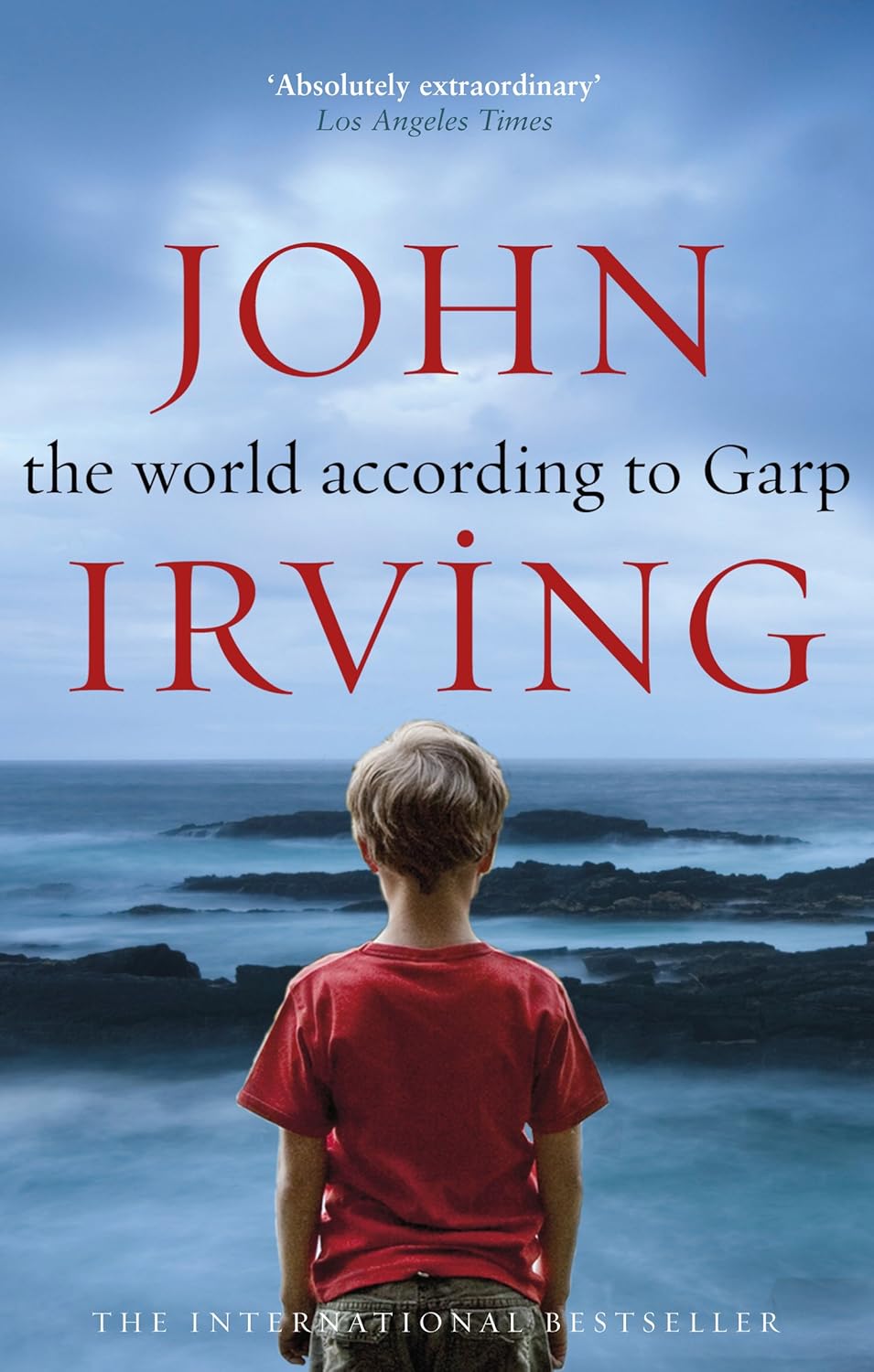
The World According to Garp by John Irving
I won't lie when I tell you that the death of actor Robin Williams really had an impact on me. That is a weird way to start off my review of The World According to Garp by John Irving but if you are a Robin Williams fan then you are probably aware that he starred in the film adaption of the acclaimed novel. I had never heard of the novel or film before Williams's death. In fact, I found there were many Robin Williams films that I was ignorant to. In an attempt to become more familiar with his film career, I added all of his film credits to my watch list. But Garp was different. Seeing as it was a novel, I added it to the top of my reading list although I can't say I was looking forward to the read. The book sounded okay, my library copy was old and worn and I just wasn't in the mood to read a huge book. I had to give myself a pep talk for that last reason because it is a long read. To my surprise, Garp immediately got my attention and I knew long before I finished that it would be a favorite.
The World According to Garp is a widely expansive novel that focuses on the life of writer T.S. Garp. The story begins with an in depth look at his mother Jenny Fields and how she came to conceive Garp. It would seem a bit curious that the story doesn't start with our main man but then again, there are many curious narrative choices made by author John Irving to tell Garp's story and all of the choices are particularly brilliant; for if we didn't hear Jenny Fields story then we wouldn't have such a good look at how Garp's mother impacted him and his life. The book focuses on many things in the midst of Garp's life. At once it is a commentary on list and politics and the next moment it is about writers and morality and parental paranoia. The book encompasses so many aspects of life and with most novels this would be a huge problem. But not with Garp. Irving seems very aware of the grandness of his tale and matches it with brilliant writing and deep reflections on life and diverse characters.
I feel compelled to compare the experience of reading this novel to reading Ian McEwan's Atonement when I was 17. While these novels are completely different in scope, they both focus on a similar theme and that is the theme of the writer. Both novels illustrate how reality becomes fiction and how fiction is not much different than reality and how the two bleed into one another for better or worse. This theme is captured so well in Garp.
My complaints are limited when it comes to this book. It was a bit boring at times but character development makes up for it. I had a love/hate relationship with Garp's writing. While it was awesome how he came to write a certain piece, I never truly enjoyed reading his writing. I appreciated it in the overall scope of the story but actually reading it was hard to get through. But I don't feel those complaints warrant me from not loving this book because man, did I love it. I'm so glad I read it and wish I could take a class on it and study it more! Definitely giving this 5 out of 5 stars.
The World According to Garp is a widely expansive novel that focuses on the life of writer T.S. Garp. The story begins with an in depth look at his mother Jenny Fields and how she came to conceive Garp. It would seem a bit curious that the story doesn't start with our main man but then again, there are many curious narrative choices made by author John Irving to tell Garp's story and all of the choices are particularly brilliant; for if we didn't hear Jenny Fields story then we wouldn't have such a good look at how Garp's mother impacted him and his life. The book focuses on many things in the midst of Garp's life. At once it is a commentary on list and politics and the next moment it is about writers and morality and parental paranoia. The book encompasses so many aspects of life and with most novels this would be a huge problem. But not with Garp. Irving seems very aware of the grandness of his tale and matches it with brilliant writing and deep reflections on life and diverse characters.
I feel compelled to compare the experience of reading this novel to reading Ian McEwan's Atonement when I was 17. While these novels are completely different in scope, they both focus on a similar theme and that is the theme of the writer. Both novels illustrate how reality becomes fiction and how fiction is not much different than reality and how the two bleed into one another for better or worse. This theme is captured so well in Garp.
My complaints are limited when it comes to this book. It was a bit boring at times but character development makes up for it. I had a love/hate relationship with Garp's writing. While it was awesome how he came to write a certain piece, I never truly enjoyed reading his writing. I appreciated it in the overall scope of the story but actually reading it was hard to get through. But I don't feel those complaints warrant me from not loving this book because man, did I love it. I'm so glad I read it and wish I could take a class on it and study it more! Definitely giving this 5 out of 5 stars.
Tuesday, January 6, 2015
Freakonomics by Steven D. Levitt & Stephen Dubner
I don't listen to audiobooks often. I only listen when I feel I don't have time to read a book but want to comment on it or if I feel listening would be more beneficial. In the case of Freakonomics, listening definitely seemed more beneficial because I am a frequent listener of the podcast with the same name. I enjoy the podcast. It isn't my favorite but I enjoy it. I have also seen the documentary, complements to Netflix.
If you are like me and have this much experience with Freakonomics, I wouldn't recommend this book. Much of the text was old news to me. I've already heard the argument about less crime in the 90's having to do with legalized abortion, and I already know about the sumo wrestlers cheating. I've heard the same argument about names not deciding a person's fate over three times between the book, podcast, and documentary. So in that regard, the book was a bit repetitive and boring. However, if you are coming to this book for the first time and have no prior experience with the podcast or documentary than you will probably enjoy this book.
What I love about Freakonomics is that it makes connections is placed no one thinks to look. It isn't a biased program taking sides but just dishes the info and allows you to make your final call. The same can be said with this book. It presents the evidence very well but also leaves room for defiance.
Overall, it is a good book. It didn't really wow me so perhaps my review is biased since I already formed a relationship with Freakonomics. I will give the book a 3 out of 5 stars.
If you are like me and have this much experience with Freakonomics, I wouldn't recommend this book. Much of the text was old news to me. I've already heard the argument about less crime in the 90's having to do with legalized abortion, and I already know about the sumo wrestlers cheating. I've heard the same argument about names not deciding a person's fate over three times between the book, podcast, and documentary. So in that regard, the book was a bit repetitive and boring. However, if you are coming to this book for the first time and have no prior experience with the podcast or documentary than you will probably enjoy this book.
What I love about Freakonomics is that it makes connections is placed no one thinks to look. It isn't a biased program taking sides but just dishes the info and allows you to make your final call. The same can be said with this book. It presents the evidence very well but also leaves room for defiance.
Overall, it is a good book. It didn't really wow me so perhaps my review is biased since I already formed a relationship with Freakonomics. I will give the book a 3 out of 5 stars.
Friday, January 2, 2015
Why I Return to Harry Potter
When I tell people that I have read the Harry Potter books six times (the first book seven times), most are shocked that I would return to a series so many times. That equates to 43 books and over 25,000 pages (25, 479 to be exact). I'm shocked by those numbers myself. While those numbers are large, I never feel as if rereading the books is any sort of grand accomplishment. For me, rereading these books is a tradition. I return to them like I return to buying gifts at Christmas and eating pumpkin pie at Thanksgiving. I return to them as an adult would return to their childhood home, just to take a peek back into their childhood even if it is a quick glimpse. Harry Potter, to me, is the same as returning to my elementary school or watching old home movies or eating a piece of pizza that tastes exactly like the kind from Chuckie Cheese where I had birthday parties often. I am filled with a sense of time travel that no Tardis will ever give me. In many ways the books are a key to my past. They are my very own pensieve. Each time I read I dip into a different memory, recalling my old self and my old perceptions. The books hold many pieces of me and in most cases I leave them a different person.
Books, in my opinion, are more than just simple words on a page. They are friends, experiences, and life lessons. They reveal truth to us in very subtle and unexpected ways. With them we learn new things and sometimes a book will raise more questions than answers, forcing us to look deeper into the text and deeper into our own lives. When I reread Harry Potter, it isn't only nostalgia that keeps me coming back. It is the sense that every time I return I will be gaining new insight not only in my life but into the text. Rereading forces me to notice different bits of dialogue that reveal character depth and allows me to notice foreshadowing which in turn reveals the brilliance of J.K. Rowling and helps me in my own writings. There is a lot to be gained from Harry Potter in terms of plot, mystery, character and setting for any writer.
Growing up with Harry always gave me a small sense of community. When I read about Harry visiting the Weasley house I was, and still am, reminded of family gatherings and nights spent with the youth group. The comradery provided a sense of relatability and provides a look back at childhood ethics similar to those found in the 1986 film Stand By Me.
But I think what ultimately brings me back to Harry is my love of literature. Going back to analyze these books is such a treat and helps me when going to analyze other works of art. And I think Harry Potter provides this amazing element of story telling in that it raises more questions than it answers. The books continually force me to think critically and help me become a better critic, artist and writer. For that I am thankful!
Books, in my opinion, are more than just simple words on a page. They are friends, experiences, and life lessons. They reveal truth to us in very subtle and unexpected ways. With them we learn new things and sometimes a book will raise more questions than answers, forcing us to look deeper into the text and deeper into our own lives. When I reread Harry Potter, it isn't only nostalgia that keeps me coming back. It is the sense that every time I return I will be gaining new insight not only in my life but into the text. Rereading forces me to notice different bits of dialogue that reveal character depth and allows me to notice foreshadowing which in turn reveals the brilliance of J.K. Rowling and helps me in my own writings. There is a lot to be gained from Harry Potter in terms of plot, mystery, character and setting for any writer.
Growing up with Harry always gave me a small sense of community. When I read about Harry visiting the Weasley house I was, and still am, reminded of family gatherings and nights spent with the youth group. The comradery provided a sense of relatability and provides a look back at childhood ethics similar to those found in the 1986 film Stand By Me.
But I think what ultimately brings me back to Harry is my love of literature. Going back to analyze these books is such a treat and helps me when going to analyze other works of art. And I think Harry Potter provides this amazing element of story telling in that it raises more questions than it answers. The books continually force me to think critically and help me become a better critic, artist and writer. For that I am thankful!
Monday, December 22, 2014
To Kill a Mockingbird by Harper Lee
It was June 2007 and I had been assigned to read Harper Lee's To Kill a Mockingbird for my summer reading homework before I started my junior year of high school. The book was one I had heard of as being a classic and a renowned piece of literature yet I had also heard from friends who had already read it that it was dreadfully boring and dumb. My assignment was simple. I had to find 15-20 quotes for three pre-chosen themes and then hand write three 150 word essays about the themes and integrate my quotes. It was a simple summer task but for most it was a complete buzz kill. I have always enjoyed summer reading. There was never any pressure for you to read the book fast or for peer interaction. It was just me and a book and my thoughts. I found that I enjoyed the assignment. In fact, it was this book in particular that changed the way I viewed books and literature and writing.
I loved this book. My 16 going on 17 year old self was mesmerized by Scout and her innocence and the adventures she had that so often reflected my own childhood although we were years and worlds apart. I loved the simplicity of the novel and it's call for justice. When I turned the final page I was confident that this book would be taking it's place on my favorites shelf.
I hadn't returned to the book since then and was curious to see if it would hold the same quality reading it a second time. I reread Where the Red Fern Grows almost ten years after reading it a first time and found I didn't enjoy it nearly as much as my 12 year old self did. This may be because Red Fern was my first experience with a subtle title. I remember thinking how brilliant it was that the author named the book after something so beautiful as the flowers that grew on the dog's graves. When I reread the book, I was experienced with so many books that did something similar and therefore Red Fern lost it's "wow" factor for me. Luckily, Mockingbird wasn't the same type of experience.
Mockingbird indeed introduced me to a lot of literary tropes but it also shaped the way I look at literature. My growth only stemmed from my first reading of this book. The second read was just as good. I definitely gained a better perspective on Atticus this time around and teared up after reading his speech at Tom Robinson's trial.
I keep asking myself, why this book? Why is this the book that gained all of the attention? Well, of course it is written well and it's message is unlikely to be beaten. But I also think there is a timelessness to the story that resonates with many readers. Not much happens in Scout's day to day life. She goes to school or gets in an argument with her pubescent brother or gets reprimanded by an adult. She is a child in a mixed up world and Lee is able to capture this moment of all of our lives with stand out moments yet we still feel we can relate. We may not have had a mad dog roam the neighborhood street but we did have moments that united the neighbors or scared the neighbors. We may not be teased because our father is defending a man who is racially discriminated against but we did get teased and were accused of things we shouldn't have been.
The book offers a unique look at childhood and though some call it didactic, I say it is a call to do what is right in the face of adversity. This speaks very loudly to recent events in the media. Make of that what you will. It is a call to return to innocence. This book is a 5 star book still. It still holds up to me and it will hold up as long as we continue to pick up books and seek knowledge and understanding.
I loved this book. My 16 going on 17 year old self was mesmerized by Scout and her innocence and the adventures she had that so often reflected my own childhood although we were years and worlds apart. I loved the simplicity of the novel and it's call for justice. When I turned the final page I was confident that this book would be taking it's place on my favorites shelf.
I hadn't returned to the book since then and was curious to see if it would hold the same quality reading it a second time. I reread Where the Red Fern Grows almost ten years after reading it a first time and found I didn't enjoy it nearly as much as my 12 year old self did. This may be because Red Fern was my first experience with a subtle title. I remember thinking how brilliant it was that the author named the book after something so beautiful as the flowers that grew on the dog's graves. When I reread the book, I was experienced with so many books that did something similar and therefore Red Fern lost it's "wow" factor for me. Luckily, Mockingbird wasn't the same type of experience.
Mockingbird indeed introduced me to a lot of literary tropes but it also shaped the way I look at literature. My growth only stemmed from my first reading of this book. The second read was just as good. I definitely gained a better perspective on Atticus this time around and teared up after reading his speech at Tom Robinson's trial.
I keep asking myself, why this book? Why is this the book that gained all of the attention? Well, of course it is written well and it's message is unlikely to be beaten. But I also think there is a timelessness to the story that resonates with many readers. Not much happens in Scout's day to day life. She goes to school or gets in an argument with her pubescent brother or gets reprimanded by an adult. She is a child in a mixed up world and Lee is able to capture this moment of all of our lives with stand out moments yet we still feel we can relate. We may not have had a mad dog roam the neighborhood street but we did have moments that united the neighbors or scared the neighbors. We may not be teased because our father is defending a man who is racially discriminated against but we did get teased and were accused of things we shouldn't have been.
The book offers a unique look at childhood and though some call it didactic, I say it is a call to do what is right in the face of adversity. This speaks very loudly to recent events in the media. Make of that what you will. It is a call to return to innocence. This book is a 5 star book still. It still holds up to me and it will hold up as long as we continue to pick up books and seek knowledge and understanding.
Tuesday, November 25, 2014
Literary Critic; Disney After Dark by Ridley Pearson
Hello, I'm the Literary Critic. I read it so you don't have to. Can we talk about Young Adult fiction for a moment? I mean, the genre is basically a brand these days from John Green to The Hunger Games. And while lots of YA is very good, there is also a butt load more that suck. Now don't get me wrong, every genre includes sucky titles. But YA seems particularly prone to the suckiest of them all. Why is this you might ask? Well, I think there are an array of reasons beyond all of our comprehension but the main reason that I've noticed is an author's ability to write down to readers. They don't try to write a genuinely good novel but write a silly story because it is assumed that kids and teens will drink that crap up. And that is just not true. Sure there are kids who enjoy the bad books but if they take an interest, how can we fault them? But there are many kids who seek good literature and lean toward adult novels to do so because the books in their age group have no appeal and just aren't good. And that isn't how it should be. A book should be good on it's own and not have to stoop down the story.
Oh, you think I'm wrong? You think these books don't exist? Well, they do dammit! Have you ever read Bridge to Terabithia or The Secret Garden or Sarah, Plain and Tall or Holes or The Lion, the Witch, and the Wardrobe or Harry Potter or Skellig or Matilda or...I think you see my point. So what do all of these books have in common? Well, they are good pieces of literature. They appeal to children's imaginations yet the writing holds up. The characters are developed and complex and the author is taking a simple story and painting it as a beautiful artwork. Yes, that is literature, and YA literature at that and it is so damn good! But lots of YA doesn't fall into this category. Why? Because lots of books seem to think that because they are in the children's or YA category, they don't need to write credible scenarios or unique characters. As long as there is an adventure, kids will eat it up. And that is a big issue in my opinion. I take issue when adults say, "well at least they're reading." Kids shouldn't be subjected to lazy writing. They should get a book that took the time to really write a good book and not just because it is for kids.
Now I know what you may be thinking. I'm a 24 year old woman. Why would I be reading books below my age group? Well here is the problem: books can be written toward an age group but should not be limited. This goes for all art. Sure there are shows like Barney that aren't necessarily good but that show is aimed to teach kids things like colors and rhymes and numbers and has no real merit beyond that...and even the characters on Barney are more unique than those in some YA books. But look at another series called American Girl. Those books could easily be looked at as marketing strategies to sell more dolls and make more money but if you actually sit down and read the books, they are actually very well done. Sure the writing isn't perfect but there are never any inconsistencies, the characters are well developed and you learn a lot about culture and history along the way. I read them last year and really enjoyed them. Sure they had their problems but all books have those. My point is, there is a difference between a children's book and a childish book. The first being a genre and you can expect fantasy and lots of hypothetical situations but altogether fun, the second being poorly written and the author being outright lazy because of the genre.
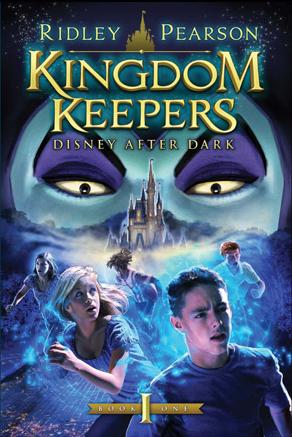
So with that in mind, let's talk about the first book of seven (there are seven books of this garbage??) in the Kingdom Keepers series titled Disney After Dark. Okay so what is this book about? Well we begin with a boy named Finn. He is the typical handsome white male who lives in Florida and is pretty famous because of his role at the Disney Parks. Finn along with four other kids, whose names I can't recall because they are all so boring and generic, are DHI's which stands for Disney Host Interactive. The kids are essentially actors and they have filmed scenes where they talk about rides and the park. These holographic images are then digitally projected in the parks for guests who need help. One night, something acts up in the Disney servers and Finn's dream becomes a reality when he finds himself at the park in his DHI form after he goes to bed and the park is closed. There he meets Wayne, the obligatory wise old man, who cryptically talks to Finn even though he has no reason to. We learn that the parks are in trouble and that the DHI's are the only ones who can save the parks, and apparently the world. That's right. The DHI's must defeat Disney villains come to life because they want...what else? World domination...because that isn't cliche. Anyway, Finn seeks help from a girl in his school named Amanda who is keeping a secret of her own. Oooooh, mysterious! With Amanda's help, the DHI's try to solve a mystery that will bring peace back to the parks and let them sleep without entering their DHI forms ever again.
The premise sounds a little rough but not too bad. I was interested when I read the back cover of the book. The book had some good parts...or, well a couple. Okay two or three. The concept of the DHI's is cool and questioning technology and our relationship with it is awesome. At one point Amanda sees a theme park goer walk through a DHI hologram and comments that it is rude and I thought it was awesome that this book may be asking the reader to question her logic. Like, is it actually rude when the DHI's aren't actual beings but just projected images? But the book never really got to that place again. And okay, parts of the ending I didn't see coming. But this book still sucks. Boy does it deserve to rot in a garbage dump. This book was so bad that I actually wanted to kill myself. And let me mention that I hate suicide notions and never make them...except this one time because it is necessary. I mean, I really wonder if the author had a hat full of plots and just reached in for an easy explanation or a random piece of generic dialogue or some kind of crap to end the chapter. The entire book was so ridiculous and contrived that this wouldn't surprise me.
Let's talk about the characters first because they were by far the worst part of this book. First off, what utter vanilla characters we were given. I like to think of all of them like balls of grape jelly...or, whatever jelly you want to imagine. It doesn't matter to me. There is no authenticity or character integrity to them. They just shape into the form the author desires. If the author wants a suave character, he's got it. If the author wants a fighter, he's got a fighter. But when you remove the jelly from it's fighter or suave jar, it will never stand on it's own. It will always fall flat. And that is essentially what these characters are, flat. Between the rotten dialogue and horribly forced interactions, one wonders how this book was even published in the first place. I mean, what sort of person would allow this junk to print?...Let's look at some direct quotes, shall we?
At the end of one of the chapter's, a woman isn't taking Finn seriously because of his age. She notes he is 13 and Finn corrects her, "14. I will be 14 next month." So wait, you are 13 then? Well isn't he a smart character. When someone states his age he feels a need to correct that person that they are right yet it is supposed to come across as smart. Yeah...cause that isn't stupid. I mean, why would this piece of dialogue be allowed in any text? I feel disgusted just featuring it in my review. Here is another example of the stiff dialogue. Finn is looking for clues with another DHI and says, "Hey guess what? We haven't got a clue." The other DHI then responds in annoyance, "That's a sick joke." Wait so, that was...a joke? Am I too old to get it? Or are these kids smoking something?
But my favorite quotes by far were from conversations between Finn and Amanda. I mean, these don't get any dumber. And it isn't just their dialogue, it is the narration and the ridiculous story that they are placed into. The story sets it up as if Finn and Amanda only know each other from passing in the school halls or having a class or two together. When Finn asks her for help...*POOF*...they are suddenly destined to be a romantic item. Finn will be confused by Amanda's girlish wit and Amanda will be jealous when Finn talks to any other girl. How adorable. I love teenage romance. My favorite TV station is ABC Family and the Lifetime Network. There is a part where the two are riding bikes and the narration goes, "Amanda stayed in the lead on her bike. Thankfully, she hadn't asked any questions, and he took this as a sign they were becoming really good friends." A silent woman! Men love these! Don't speak your mind girl, Finn likes it. It makes him feel much more comfortable than having to explain himself to you. A passage like this could be viewed as subtle and quite good but it just doesn't work with these characters. They are the most vanilla of the bunch yet we spend the most time with them! They also constantly contradict themselves. In this passage Amanda isn't upset with Finn for not telling her anything yet just a few chapters ago she was fuming at him for the same thing. And Finn contradicts himself within a page and a half when he states he respects the one DHI for being smart and then says how annoying his smarts are. WHY DO THESE CHARACTERS HAVE NO CONSISTENCY???!!!! WHERE IS THE DEPTH?? WE DON'T NEED MORE STEREOTYPES!!!
Even the adults are black and white cliches. Take Finn's mother for example. She is the mother that cries when her son goes anywhere with a girl. Oh Finn got paired with a girl in science. I bet they will get married! My boy is growing up! His mother also asks questions and grounds her son yet doesn't follow up when necessary. Like the entire book is her grounding Finn but when Finn starts breaking the most rules, she is out of the picture. She is only included when it is convenient for the plot. How nice. But Finn's mother isn't the only suspicious adult. All the adults are suspicious and not in a credible way but again just for the sake of the plot. Even when Finn asks an innocent question they are on to him like dogs sniffing for drugs. Finn could have asked for a strawberry ice-cream cone and they would reply, hey punk why don't you order vanilla to match your personality?
Oh, and I forgot to mention that Finn's lady friend is not only vanilla but angelic. Yep, she is literally an angel. The book goes out of it's way to establish that Amanda lives in an old church and tries to set up beautiful imagery but I think it is safe to say the author just flew too high without a parachute. I mean, what Ridley Pearson did to Amanda is identical to what Stephenie Meyer did to Bella in Twilight. It just isn't good writing and completely missed the mark. Speaking of missing the mark, let's talk about the author setting up situations and not tying them up at the end. I already talked about Finn's mom and her lack of parental control when it is beneficial to Finn's plot. Let's talk about a scene in one of the early chapters of the book. Finn and Amanda visit the parks one day without permission (Finn needs to carry a special pass with him when he visits the parks because he is a DHI) and are chased by a bunch of security guards. Amanda angelically saves them by finding a secret passage way and they narrowly escape the guards. Once the guards that were chasing them walk away, Finn and Amanda walk out into the open and suddenly everything is normal. I'm almost positive they go and get ice-cream or something along those lines (I can't check the source material because I threw that book away the moment I finished the last sentence so I apologize for that). So...wait, isn't Finn wanted still?...won't other security guards see him?...how can he magically be wanted one minute but off free the next?....oh screw continuity. Let's just let the kids have fun at Disney World even though it contradicts the entire chapter we just read. No big deal.
This is one of the many plot holes in this book. Other plot holes include the fact that Maleficent magically comes to life yet Finn and the other DHI's actually see people dressed up in Mickey and Cinderella garb. How does that work? Well...it doesn't quite frankly. The ending was atrocious. The story essentially breaks the law of physics when Finn can suddenly become a DHI anytime he wants and at the end of the book he simple spins around and *POOF* the spell is broken. The story never was set up to be a fantasy. It is set up as science fiction where a person can enter another realm. How easy of the author to switch genres for plot convenience. It is the sign of poor writing and poor plotting. And I bet you thought this book couldn't get any worse, right? Well you are dead wrong because it can! This author has no basic knowledge of Disney history and Disney World. At one point he refers to the Hollywood Studios nighttime spectacular as "Fantasmics" instead of "Fantasmic". Good job buddy. You have absolutely no concept of your source material. Always the sign of a good author.
This book is awful! And I know awful! I read Twilight. And this was worse! I feel like the author is trying to get us to purposefully dumb ourselves down. This Night at the Museum recreation is full of contradictions, bland characters, over dramatized situations, and stab you in the eye dialogue. The book should have a warning on the back that the side effects of reading it include self harm, please keep all readers away from sharp objects and prescription drugs. Between the forced relationship between Finn and Amanda and the awful one liners, I was lucky to not bring a gun to my head. This has to be one of the worst books I've read in a long while and to think it is a series is mind boggling. I wouldn't return to this series if my life depended on it!
The only part of this book I enjoyed was the first paragraph of a later chapter on page 244 and it says, "The transportation and ticket center hummed with conversations as a tangle of park visitors shuttled between buses and monorails. Some families were ending their days just as others were starting theirs. On a Monday afternoon, thick with humidity, the tired and impatient mingled with the exhilarated and anxious. For some, a day spent; for others, an evening full of promise. The humidity hung in the air so heavily you could practically wear it like a coat." Okay, why couldn't the entire book be like that one paragraph? It was a diamond in a whole lot of rough.
What do I think of this book? Well, it pretty much blows. It is the worst bunch of words splattered on paper. I've never wanted to barf so much in my life. This could be the book that would turn kids off to books...like when you visit a fast food chain and vomit and vow to never go there again. Well this is the vomit that scares a kid from reading and makes them think it is stupid. There are some good moments...well two to be exact, which is not enough to redeem this awful awful excuse for a book. A stupid movie I could see. But a book? This is just despicable. 1 out of 5 stars from me.
To whom it may concern: This review was a parody of two things, 75% Nostalgia Critic and 25% Literary Disco podcast. This review most definitely reflects my views though I expressed them in the form I was parodying.
Oh, you think I'm wrong? You think these books don't exist? Well, they do dammit! Have you ever read Bridge to Terabithia or The Secret Garden or Sarah, Plain and Tall or Holes or The Lion, the Witch, and the Wardrobe or Harry Potter or Skellig or Matilda or...I think you see my point. So what do all of these books have in common? Well, they are good pieces of literature. They appeal to children's imaginations yet the writing holds up. The characters are developed and complex and the author is taking a simple story and painting it as a beautiful artwork. Yes, that is literature, and YA literature at that and it is so damn good! But lots of YA doesn't fall into this category. Why? Because lots of books seem to think that because they are in the children's or YA category, they don't need to write credible scenarios or unique characters. As long as there is an adventure, kids will eat it up. And that is a big issue in my opinion. I take issue when adults say, "well at least they're reading." Kids shouldn't be subjected to lazy writing. They should get a book that took the time to really write a good book and not just because it is for kids.
Now I know what you may be thinking. I'm a 24 year old woman. Why would I be reading books below my age group? Well here is the problem: books can be written toward an age group but should not be limited. This goes for all art. Sure there are shows like Barney that aren't necessarily good but that show is aimed to teach kids things like colors and rhymes and numbers and has no real merit beyond that...and even the characters on Barney are more unique than those in some YA books. But look at another series called American Girl. Those books could easily be looked at as marketing strategies to sell more dolls and make more money but if you actually sit down and read the books, they are actually very well done. Sure the writing isn't perfect but there are never any inconsistencies, the characters are well developed and you learn a lot about culture and history along the way. I read them last year and really enjoyed them. Sure they had their problems but all books have those. My point is, there is a difference between a children's book and a childish book. The first being a genre and you can expect fantasy and lots of hypothetical situations but altogether fun, the second being poorly written and the author being outright lazy because of the genre.
So with that in mind, let's talk about the first book of seven (there are seven books of this garbage??) in the Kingdom Keepers series titled Disney After Dark. Okay so what is this book about? Well we begin with a boy named Finn. He is the typical handsome white male who lives in Florida and is pretty famous because of his role at the Disney Parks. Finn along with four other kids, whose names I can't recall because they are all so boring and generic, are DHI's which stands for Disney Host Interactive. The kids are essentially actors and they have filmed scenes where they talk about rides and the park. These holographic images are then digitally projected in the parks for guests who need help. One night, something acts up in the Disney servers and Finn's dream becomes a reality when he finds himself at the park in his DHI form after he goes to bed and the park is closed. There he meets Wayne, the obligatory wise old man, who cryptically talks to Finn even though he has no reason to. We learn that the parks are in trouble and that the DHI's are the only ones who can save the parks, and apparently the world. That's right. The DHI's must defeat Disney villains come to life because they want...what else? World domination...because that isn't cliche. Anyway, Finn seeks help from a girl in his school named Amanda who is keeping a secret of her own. Oooooh, mysterious! With Amanda's help, the DHI's try to solve a mystery that will bring peace back to the parks and let them sleep without entering their DHI forms ever again.
The premise sounds a little rough but not too bad. I was interested when I read the back cover of the book. The book had some good parts...or, well a couple. Okay two or three. The concept of the DHI's is cool and questioning technology and our relationship with it is awesome. At one point Amanda sees a theme park goer walk through a DHI hologram and comments that it is rude and I thought it was awesome that this book may be asking the reader to question her logic. Like, is it actually rude when the DHI's aren't actual beings but just projected images? But the book never really got to that place again. And okay, parts of the ending I didn't see coming. But this book still sucks. Boy does it deserve to rot in a garbage dump. This book was so bad that I actually wanted to kill myself. And let me mention that I hate suicide notions and never make them...except this one time because it is necessary. I mean, I really wonder if the author had a hat full of plots and just reached in for an easy explanation or a random piece of generic dialogue or some kind of crap to end the chapter. The entire book was so ridiculous and contrived that this wouldn't surprise me.
Let's talk about the characters first because they were by far the worst part of this book. First off, what utter vanilla characters we were given. I like to think of all of them like balls of grape jelly...or, whatever jelly you want to imagine. It doesn't matter to me. There is no authenticity or character integrity to them. They just shape into the form the author desires. If the author wants a suave character, he's got it. If the author wants a fighter, he's got a fighter. But when you remove the jelly from it's fighter or suave jar, it will never stand on it's own. It will always fall flat. And that is essentially what these characters are, flat. Between the rotten dialogue and horribly forced interactions, one wonders how this book was even published in the first place. I mean, what sort of person would allow this junk to print?...Let's look at some direct quotes, shall we?
At the end of one of the chapter's, a woman isn't taking Finn seriously because of his age. She notes he is 13 and Finn corrects her, "14. I will be 14 next month." So wait, you are 13 then? Well isn't he a smart character. When someone states his age he feels a need to correct that person that they are right yet it is supposed to come across as smart. Yeah...cause that isn't stupid. I mean, why would this piece of dialogue be allowed in any text? I feel disgusted just featuring it in my review. Here is another example of the stiff dialogue. Finn is looking for clues with another DHI and says, "Hey guess what? We haven't got a clue." The other DHI then responds in annoyance, "That's a sick joke." Wait so, that was...a joke? Am I too old to get it? Or are these kids smoking something?
But my favorite quotes by far were from conversations between Finn and Amanda. I mean, these don't get any dumber. And it isn't just their dialogue, it is the narration and the ridiculous story that they are placed into. The story sets it up as if Finn and Amanda only know each other from passing in the school halls or having a class or two together. When Finn asks her for help...*POOF*...they are suddenly destined to be a romantic item. Finn will be confused by Amanda's girlish wit and Amanda will be jealous when Finn talks to any other girl. How adorable. I love teenage romance. My favorite TV station is ABC Family and the Lifetime Network. There is a part where the two are riding bikes and the narration goes, "Amanda stayed in the lead on her bike. Thankfully, she hadn't asked any questions, and he took this as a sign they were becoming really good friends." A silent woman! Men love these! Don't speak your mind girl, Finn likes it. It makes him feel much more comfortable than having to explain himself to you. A passage like this could be viewed as subtle and quite good but it just doesn't work with these characters. They are the most vanilla of the bunch yet we spend the most time with them! They also constantly contradict themselves. In this passage Amanda isn't upset with Finn for not telling her anything yet just a few chapters ago she was fuming at him for the same thing. And Finn contradicts himself within a page and a half when he states he respects the one DHI for being smart and then says how annoying his smarts are. WHY DO THESE CHARACTERS HAVE NO CONSISTENCY???!!!! WHERE IS THE DEPTH?? WE DON'T NEED MORE STEREOTYPES!!!
Even the adults are black and white cliches. Take Finn's mother for example. She is the mother that cries when her son goes anywhere with a girl. Oh Finn got paired with a girl in science. I bet they will get married! My boy is growing up! His mother also asks questions and grounds her son yet doesn't follow up when necessary. Like the entire book is her grounding Finn but when Finn starts breaking the most rules, she is out of the picture. She is only included when it is convenient for the plot. How nice. But Finn's mother isn't the only suspicious adult. All the adults are suspicious and not in a credible way but again just for the sake of the plot. Even when Finn asks an innocent question they are on to him like dogs sniffing for drugs. Finn could have asked for a strawberry ice-cream cone and they would reply, hey punk why don't you order vanilla to match your personality?
Oh, and I forgot to mention that Finn's lady friend is not only vanilla but angelic. Yep, she is literally an angel. The book goes out of it's way to establish that Amanda lives in an old church and tries to set up beautiful imagery but I think it is safe to say the author just flew too high without a parachute. I mean, what Ridley Pearson did to Amanda is identical to what Stephenie Meyer did to Bella in Twilight. It just isn't good writing and completely missed the mark. Speaking of missing the mark, let's talk about the author setting up situations and not tying them up at the end. I already talked about Finn's mom and her lack of parental control when it is beneficial to Finn's plot. Let's talk about a scene in one of the early chapters of the book. Finn and Amanda visit the parks one day without permission (Finn needs to carry a special pass with him when he visits the parks because he is a DHI) and are chased by a bunch of security guards. Amanda angelically saves them by finding a secret passage way and they narrowly escape the guards. Once the guards that were chasing them walk away, Finn and Amanda walk out into the open and suddenly everything is normal. I'm almost positive they go and get ice-cream or something along those lines (I can't check the source material because I threw that book away the moment I finished the last sentence so I apologize for that). So...wait, isn't Finn wanted still?...won't other security guards see him?...how can he magically be wanted one minute but off free the next?....oh screw continuity. Let's just let the kids have fun at Disney World even though it contradicts the entire chapter we just read. No big deal.
This is one of the many plot holes in this book. Other plot holes include the fact that Maleficent magically comes to life yet Finn and the other DHI's actually see people dressed up in Mickey and Cinderella garb. How does that work? Well...it doesn't quite frankly. The ending was atrocious. The story essentially breaks the law of physics when Finn can suddenly become a DHI anytime he wants and at the end of the book he simple spins around and *POOF* the spell is broken. The story never was set up to be a fantasy. It is set up as science fiction where a person can enter another realm. How easy of the author to switch genres for plot convenience. It is the sign of poor writing and poor plotting. And I bet you thought this book couldn't get any worse, right? Well you are dead wrong because it can! This author has no basic knowledge of Disney history and Disney World. At one point he refers to the Hollywood Studios nighttime spectacular as "Fantasmics" instead of "Fantasmic". Good job buddy. You have absolutely no concept of your source material. Always the sign of a good author.
This book is awful! And I know awful! I read Twilight. And this was worse! I feel like the author is trying to get us to purposefully dumb ourselves down. This Night at the Museum recreation is full of contradictions, bland characters, over dramatized situations, and stab you in the eye dialogue. The book should have a warning on the back that the side effects of reading it include self harm, please keep all readers away from sharp objects and prescription drugs. Between the forced relationship between Finn and Amanda and the awful one liners, I was lucky to not bring a gun to my head. This has to be one of the worst books I've read in a long while and to think it is a series is mind boggling. I wouldn't return to this series if my life depended on it!
The only part of this book I enjoyed was the first paragraph of a later chapter on page 244 and it says, "The transportation and ticket center hummed with conversations as a tangle of park visitors shuttled between buses and monorails. Some families were ending their days just as others were starting theirs. On a Monday afternoon, thick with humidity, the tired and impatient mingled with the exhilarated and anxious. For some, a day spent; for others, an evening full of promise. The humidity hung in the air so heavily you could practically wear it like a coat." Okay, why couldn't the entire book be like that one paragraph? It was a diamond in a whole lot of rough.
What do I think of this book? Well, it pretty much blows. It is the worst bunch of words splattered on paper. I've never wanted to barf so much in my life. This could be the book that would turn kids off to books...like when you visit a fast food chain and vomit and vow to never go there again. Well this is the vomit that scares a kid from reading and makes them think it is stupid. There are some good moments...well two to be exact, which is not enough to redeem this awful awful excuse for a book. A stupid movie I could see. But a book? This is just despicable. 1 out of 5 stars from me.
To whom it may concern: This review was a parody of two things, 75% Nostalgia Critic and 25% Literary Disco podcast. This review most definitely reflects my views though I expressed them in the form I was parodying.
Monday, November 10, 2014
The Gospel According to Disney by Mark I. Pinsky
When I was 15, I attended church camp for a second time. As much as I want to go into great detail about my experiences there, I will spare you the reader and get to the point that relates to this book review. My friends and I were at evening chapel, soaking in what the Pastor was saying. Suddenly, he stepped aside and the lights dimmed. The screen lit up in a blue glow and once our eyes adjusted it became apparent we were watching a clip from a Disney movie...and not just any Disney movie but The Lion King, one of my all time favorites! What does The Lion King have to do with church? I asked myself. Let me paint the scene for you. Simba has just reunited with his childhood friend who believed him to be dead and confronts him with his past that he thought he left behind him. Angry, confused, and lost Simba walks to the water and stares at his reflection in the water. Suddenly, the peace is disturbed by the wise old Rafiki who tells Simba he knows he is Mufasa's boy. When Simba tells him his father is dead, Rafiki disputes him and tells him his father is alive and he can see him if Simba follows Rafiki. Simba follows and they arrive at another body of water. Rafiki tells Simba to look and when Simba looks at the water, he only sees his reflection. Rafiki urges him to look harder and suddenly Simba is starring at the image of his father. Then Rafiki says the iconic words, "You see, he lives in you." There is a loud rumbling and in the sky stands Mufasa, urging Simba to stop running from his past and to take his place on Pride Rock as King. When Mufasa's ghost fades, Rafiki furthers his message by saying, "Oh yes the past can hurt, but the way I see it you can either run from it or learn from it." Hans Zimmer's score beautifully clashes with the African choir as Simba makes his decision to return to Pride Rock. Tears welled up in my eyes. A great deal of my emotion stemmed from the nostalgia I was feeling. But it was also more than that. I had never known that faith could be seen through "secular" entertainment. Yet here was a perfect example. The Christian symbolism was so clear to me at that moment and it is one of the defining moments of my adolescence for it is the moment that inspired me to study other entertainment and look for hidden meanings in other media I encountered. I began searching for books that discussed this topic of Christian symbolism in Disney films and soon came across this book, The Gospel According to Disney by Mark I. Pinsky. I couldn't wait to read it.
This book is not what I expected at all. While the title implies that the author will be picking out bits of the gospel that are ingrained in Disney films and discussing them, it is quite the opposite. The book begins with a long chapter discussing Walt Disney's relationship with Christianity and faith in general. It takes a deep look at Walt's childhood that greatly summarizes the man the public came to know and either adore or despise. The book then goes into separate chapters discussing a different movie each chapter. Part one of the book focused on the films that were made while and a little after Walt was alive. Part two focuses on the Michael Eisner years. Once again, Pinsky provided a good look at Eisner's relationship with faith. It then goes into a bit about the theme parks and the Baptist boycott.
Critical reviews of this book are very positive while the reviews I saw online were extremely negative. This made me wonder a great deal, for I was on the latter side. I did not think this book was very good. But I think it is the title that either helped the book or made people cringe at the book. I already stated what I expected this book to be. However, I realize the title can be read another way. Rather than picking out the deeper Christian gospel messages of these films, this book gave a detailed look at Disney's relationship with culture and general religion. It didn't really look for the deeper messages but at surface level material - what Disney the company did, what it would look like if people clung to the films as a religious entity, etc. While this was also a good approach, it has already been done before. None of Pinsky's chapters looking at these wonderful films wowed me or moved me. The only chapters I took great interest in were looking at Walt's life and Eisner's life, the theme parks, and the Baptist boycott. Those chapters contained worth while substance. The rest of the book...not so much.
One huge fault of the book is Pinsky's constant lengthy summaries of each movie he talks about. Literally every chapter is a frame by frame look at the film in question. As an English major in college, I was taught that when you write an essay you should always avoid giving the summary of said subject. The person who is reading your essay or group of essays will most likely be reading it with knowledge of the content beforehand. They don't need to hear it again, they just need to hear your analysis. And if the chapter didn't contain a summary, it was Pinsky bitching about the movie's lack of political correctness. I gained nothing from these chapters which was extremely disappointing.
Another huge fallback of the book was it's lack of even addressing the gospel at all. The chapters talked more about Disney and culture and went on more about tropes and stereotypes. We get it! People talk about this all of the time. Why do we need to hear about it again? Chapters such as Alice and Wonderland and Aladdin never mentioned the gospel once. It made me question why I was continuing with the book when it wasn't even addressing the subject it claimed to tackle in the actual title! And there were a few mistakes made throughout the book as well. The one I can remember off the top of my head was in the Alice in Wonderland chapter when Pinsky kept calling Alice's older sister her governess.
And finally, the book's biggest mistake has to be the title. The word "gospel" should not be in it. It is misleading and insulting to the actual Christian gospel. Rather, the book should be titled Religion According to Disney. The book's focus on religious culture and culture in general combined with no focus on any specific faith tells me this book was not about any gospel. It is about organized religion.
This book disappointed me on multiple accounts. It is a real shame because I think there is a lot of potential in looking for the Christian gospel in Disney films but Pinsky went the cynical route. The fact that he didn't take advantage of what could have been some excellent analysis is just inadequate.
In short, this book is a compilation of what has already been said and done before. It added little to no new or interesting commentary to these excellent films.
I can't help but compare this book to a similar book I read earlier this year titled The Wisdom of Pixar by Robert Velarde. That book not only looked at Christian wisdom but philosophical wisdom and it took that knowledge and applied it to the Pixar movies. It dissected Pixar and showed where the gospel was hidden and what we as Christians or general audience can gain from it. This does not happen in The Gospel According to Disney and this is what I wanted and expected and I don't think I am alone in feeling this way.
Overall, this book wasn't very good. There were some interesting chapters about Walt himself and the Disney company outside the movies but it really was poorly structure otherwise. For what the book was going for, it wasn't a terrible book. It did a fair job at illustrating how Disney became the almost religious icon that it is today and explained the morals Disney films present that fans live by. But the glaring problems like the misleading title, the semi-present gospel analysis, and the consistent dull summaries were what I would expect from an amateur. I will give this book 2.5 out of 5 stars.
This book is not what I expected at all. While the title implies that the author will be picking out bits of the gospel that are ingrained in Disney films and discussing them, it is quite the opposite. The book begins with a long chapter discussing Walt Disney's relationship with Christianity and faith in general. It takes a deep look at Walt's childhood that greatly summarizes the man the public came to know and either adore or despise. The book then goes into separate chapters discussing a different movie each chapter. Part one of the book focused on the films that were made while and a little after Walt was alive. Part two focuses on the Michael Eisner years. Once again, Pinsky provided a good look at Eisner's relationship with faith. It then goes into a bit about the theme parks and the Baptist boycott.
Critical reviews of this book are very positive while the reviews I saw online were extremely negative. This made me wonder a great deal, for I was on the latter side. I did not think this book was very good. But I think it is the title that either helped the book or made people cringe at the book. I already stated what I expected this book to be. However, I realize the title can be read another way. Rather than picking out the deeper Christian gospel messages of these films, this book gave a detailed look at Disney's relationship with culture and general religion. It didn't really look for the deeper messages but at surface level material - what Disney the company did, what it would look like if people clung to the films as a religious entity, etc. While this was also a good approach, it has already been done before. None of Pinsky's chapters looking at these wonderful films wowed me or moved me. The only chapters I took great interest in were looking at Walt's life and Eisner's life, the theme parks, and the Baptist boycott. Those chapters contained worth while substance. The rest of the book...not so much.
One huge fault of the book is Pinsky's constant lengthy summaries of each movie he talks about. Literally every chapter is a frame by frame look at the film in question. As an English major in college, I was taught that when you write an essay you should always avoid giving the summary of said subject. The person who is reading your essay or group of essays will most likely be reading it with knowledge of the content beforehand. They don't need to hear it again, they just need to hear your analysis. And if the chapter didn't contain a summary, it was Pinsky bitching about the movie's lack of political correctness. I gained nothing from these chapters which was extremely disappointing.
Another huge fallback of the book was it's lack of even addressing the gospel at all. The chapters talked more about Disney and culture and went on more about tropes and stereotypes. We get it! People talk about this all of the time. Why do we need to hear about it again? Chapters such as Alice and Wonderland and Aladdin never mentioned the gospel once. It made me question why I was continuing with the book when it wasn't even addressing the subject it claimed to tackle in the actual title! And there were a few mistakes made throughout the book as well. The one I can remember off the top of my head was in the Alice in Wonderland chapter when Pinsky kept calling Alice's older sister her governess.
And finally, the book's biggest mistake has to be the title. The word "gospel" should not be in it. It is misleading and insulting to the actual Christian gospel. Rather, the book should be titled Religion According to Disney. The book's focus on religious culture and culture in general combined with no focus on any specific faith tells me this book was not about any gospel. It is about organized religion.
This book disappointed me on multiple accounts. It is a real shame because I think there is a lot of potential in looking for the Christian gospel in Disney films but Pinsky went the cynical route. The fact that he didn't take advantage of what could have been some excellent analysis is just inadequate.
In short, this book is a compilation of what has already been said and done before. It added little to no new or interesting commentary to these excellent films.
I can't help but compare this book to a similar book I read earlier this year titled The Wisdom of Pixar by Robert Velarde. That book not only looked at Christian wisdom but philosophical wisdom and it took that knowledge and applied it to the Pixar movies. It dissected Pixar and showed where the gospel was hidden and what we as Christians or general audience can gain from it. This does not happen in The Gospel According to Disney and this is what I wanted and expected and I don't think I am alone in feeling this way.
Overall, this book wasn't very good. There were some interesting chapters about Walt himself and the Disney company outside the movies but it really was poorly structure otherwise. For what the book was going for, it wasn't a terrible book. It did a fair job at illustrating how Disney became the almost religious icon that it is today and explained the morals Disney films present that fans live by. But the glaring problems like the misleading title, the semi-present gospel analysis, and the consistent dull summaries were what I would expect from an amateur. I will give this book 2.5 out of 5 stars.
Sunday, November 9, 2014
Nobility and Honor: the similarities of Harry Potter and Ned Stark
The genre of fantasy is one that often bleeds stories into one another. There are always influences, references, and similarities to be gathered. The work that has greatly pulled from all realms of literature is Harry Potter. The young wizard series shows links to Tolkien, Austen, Dickens, and many other famous authors. But one series the public is generally certain that Potter did not borrow from is A Song of Ice and Fire by George R. R. Martin. Despite this fact, it is safe to say that both series can be seen as similar. Of course there are big and obvious differences as well but I have always viewed A Song of Ice and Fire being the next step after Potter. Not only is the writing more mature and intricate but so is the story and the characters. After reading the Potter series six times and Ice and Fire once, I noticed a similarity in lead character Harry and the beloved Ned Stark. Ned Stark, the Hand of King Robert Baratheon in the first installment titled A Game of Thrones, is known for his unmoving honor and nobility. He is always striving to do the right thing while not having any motive other than...well, doing the right thing. He never does anything for himself but serves to be a guiding light when others wander. Some may also call this stupidity. I call it believing in something bigger than ones own self interests. An example of Ned's honor is when he...chops off the deserted ranger's head. I know that sounds kind of weird but here is why I use this as an example. Ned brings his young son Bran to watch the beheading and he tells Bran that the reason he specifically was called to do such an act is because the man who passes the sentence must swing the sword. Ned helped keep said laws in check and therefore he must enforce them. He has an honor code and sticks to it.
Ice and Fire is very character driven while Potter is very plot driven so in Potter there is room for redeemable choices...meaning if a character makes a noble choice, something noble will come out of it. In Ice and Fire, Ned's choices have dire consequences and his honorable choice to not take action after Robert's death and claim Stannis as the rightful King proves fatal to many. Even when he makes the right choice, it isn't right for the realm.
Meanwhile, young Harry is having a lesson in ethics throughout his coming of age at Hogwarts. When he honorably lets Peter Pettigrew live is Prisoner of Azkaban, he is later returned the favor when Peter cannot kill him in the cellar of Malfoy Manor. Harry also shows his nobility when he uses expelliarmus. He uses this elementary spell on many life threatening occasions and always comes out relatively unscathed. When he uses it in the sky trying to escape from Privet Drive in Deathly Hallows, the Death Eaters immediately know it is him because of his honor to not kill or maim anyone. After this, Lupin criticizes Harry on his failure to act (and I have a feeling A Game of Thrones readers were to Lupin as Ned was to Harry). But Harry is unwavering.
The two characters are also very internal. Rarely do either of them voice their deepest thoughts and are very reflective on their actions and the effect their actions have on how future events will unfold. A great example of Harry's internal dialogue with himself is in Deathly Hallows when he struggles with feeling alone amidst Ron and Hermione when he struggles with the idea to trust Dumbledore or not. Ned Stark also internalizes a lot and when he needs to think, he goes to the heart tree and prays to the Old Gods. To link back to Potter, many of Harry's thoughts in Deathly Hallows are like a prayer. This is especially apparent after Harry buries Dobby and is at shell cottage when he reflects, "is that why you [Dumbledore] made it so difficult? To give me time to work it out?"
Harry's adolescence very much echoes Ned Stark and I think it is safe to say he gives us a good picture of what Ned would have been like in his younger years.
Ice and Fire is very character driven while Potter is very plot driven so in Potter there is room for redeemable choices...meaning if a character makes a noble choice, something noble will come out of it. In Ice and Fire, Ned's choices have dire consequences and his honorable choice to not take action after Robert's death and claim Stannis as the rightful King proves fatal to many. Even when he makes the right choice, it isn't right for the realm.
Meanwhile, young Harry is having a lesson in ethics throughout his coming of age at Hogwarts. When he honorably lets Peter Pettigrew live is Prisoner of Azkaban, he is later returned the favor when Peter cannot kill him in the cellar of Malfoy Manor. Harry also shows his nobility when he uses expelliarmus. He uses this elementary spell on many life threatening occasions and always comes out relatively unscathed. When he uses it in the sky trying to escape from Privet Drive in Deathly Hallows, the Death Eaters immediately know it is him because of his honor to not kill or maim anyone. After this, Lupin criticizes Harry on his failure to act (and I have a feeling A Game of Thrones readers were to Lupin as Ned was to Harry). But Harry is unwavering. The two characters are also very internal. Rarely do either of them voice their deepest thoughts and are very reflective on their actions and the effect their actions have on how future events will unfold. A great example of Harry's internal dialogue with himself is in Deathly Hallows when he struggles with feeling alone amidst Ron and Hermione when he struggles with the idea to trust Dumbledore or not. Ned Stark also internalizes a lot and when he needs to think, he goes to the heart tree and prays to the Old Gods. To link back to Potter, many of Harry's thoughts in Deathly Hallows are like a prayer. This is especially apparent after Harry buries Dobby and is at shell cottage when he reflects, "is that why you [Dumbledore] made it so difficult? To give me time to work it out?"
Harry's adolescence very much echoes Ned Stark and I think it is safe to say he gives us a good picture of what Ned would have been like in his younger years.
Friday, October 31, 2014
Life of Pi by Yann Martel
There are some books that you know you are going to love the moment you lay eyes on them. This is a rare occurrence but when it happens, it is very supernatural. Life of Pi was one of these magical books. I first heard of it from school when some kids had to read it over summer vacation. I've always enjoyed my summer reading books and while I enjoyed All Quiet on the Western Front, I really wished I had been assigned Life of Pi to read before sophomore year. A few years later I bought the book used and let it sit on my bookshelf way longer than I should have. After finally reading it, I'm sorry I waited so long.
Life of Pi is about a boy named Piscine Patel. When kids make fun of him by calling him "Pissing", he takes a stand and gives himself a nickname: Pi. Three point one four. Pi's father owns a zoo and he himself is a big supporter of zoo's and makes a very valid case for them throughout the book. Pi is also unique in that he is raised Hindu and takes on Christianity and Islam later (though still a young boy). When Pi's family decides to move the zoo to Canada, their ship sinks and Pi is the only survivor on a life boat along with an orangutang, a hyena, a zebra, and a Bengal Tiger named Richard Parker. Pi's sea adventure is what takes up three quarters of this book.
The premise of this story is a very simple one - boy and tiger are stranded in the middle of the ocean and must survive. Critics say it is a book that will make you believe in the power of fiction and there are even some who dare to say this book will make you believe in God. The book carries a very delicate innocence yet also invests in exposing the raw and messy side of faith and life. The author leaves a lot of room by the end for the reader to be involved and decide their own interpretation which I really loved. The book also insists upon making the distinction between humans and animals which is a very interesting idea to read about. The story was well paced and the details were incredible. Pi himself is a wonderful character and I found I could stick behind him no matter what. Martel is an excellent storyteller and author and he kept me heavily invested in the story.
This was definitely the best book I have read all year thus far. I rate it 5 out of 5 stars and highly recommend it!
Life of Pi is about a boy named Piscine Patel. When kids make fun of him by calling him "Pissing", he takes a stand and gives himself a nickname: Pi. Three point one four. Pi's father owns a zoo and he himself is a big supporter of zoo's and makes a very valid case for them throughout the book. Pi is also unique in that he is raised Hindu and takes on Christianity and Islam later (though still a young boy). When Pi's family decides to move the zoo to Canada, their ship sinks and Pi is the only survivor on a life boat along with an orangutang, a hyena, a zebra, and a Bengal Tiger named Richard Parker. Pi's sea adventure is what takes up three quarters of this book.
The premise of this story is a very simple one - boy and tiger are stranded in the middle of the ocean and must survive. Critics say it is a book that will make you believe in the power of fiction and there are even some who dare to say this book will make you believe in God. The book carries a very delicate innocence yet also invests in exposing the raw and messy side of faith and life. The author leaves a lot of room by the end for the reader to be involved and decide their own interpretation which I really loved. The book also insists upon making the distinction between humans and animals which is a very interesting idea to read about. The story was well paced and the details were incredible. Pi himself is a wonderful character and I found I could stick behind him no matter what. Martel is an excellent storyteller and author and he kept me heavily invested in the story.
This was definitely the best book I have read all year thus far. I rate it 5 out of 5 stars and highly recommend it!
Tuesday, September 30, 2014
Watching the Tree Limbs by Mary DeMuth
I stumbled upon Watching the Tree Limbs by Mary DeMuth in an attempt to find a good "Christian" novel that was also literary. This book popped up on Google so I bought it. This was a few years ago when I was really desperate to find a book that came from a Christian worldview that was also written well and not shoving beliefs down the readers throat. It took me a long time to pick it up but I finally got to reading it.
When I first started reading this book, I really didn't like it. For some reason that I couldn't quite comprehend, I wanted to stop reading the book altogether. Part of me wondered if it was the graphic nature of the story but I'm not usually bothered by that sort of thing. The main character, Mara, is raped not even ten pages into the novel. DeMuth goes into great detail and I did feel a bit turned off but that didn't explain why I wanted to stop reading when all of it was said and done. I have since realized as I read on that it was the writing style that was a turn off. DeMuth is in no way a bad writer but her style made me feel nostalgia toward another writer and that writer was...well, my 17 year old self. Halfway through the book I was suddenly reminded of my writing style in high school since I wrote almost every day in study hall. If I had read this book back then, I bet I would have considered it a favorite. Now I'm not one to say you can't read a book that is below your age level...I'm actually very much against people accusing children's literature as being simple. However, I was a bit turned off by this realization.
As I said above, the book begins with our nine year old protagonist Mara being raped by a high school student, with a John Deer hat, nicknamed General. The book revolves around Mara's psychology after this incident as well as Mara's family history that she knows nothing about.
This book was a quicker read than expected. I became very engrossed in Mara's family mystery and desperately awaited the reveal to the community that General had been rapping Mara. The build up was excellent. The book surprisingly moved at a fast paced mixed with the slow nature of the story. I also had a bit of fun toward the end of the book when I began to guess outcomes and tried to figure out the ending based on clues given by characters and literary techniques that the author set up.
However, despite my enjoyment there was a huge low to this novel. While the book does an excellent job at keeping the reader invested and DeMuth perfectly illustrates Mara's psychology, the ending was a huge disaster. I don't mean it was a disaster in terms of the outcome; I mean disaster in terms of the ending execution. The entire novel drags the reader along wondering who Mara's family is and when will General's true identity be exposed. 320 pages out of the 346 sets this up! And all we get are simple info dumps and cliche moments. This technique isn't always bad. Harry Potter books often have info dumps at the end. But the big difference between this book and the Harry Potter books is that Harry Potter is fast paced and has tons and tons of explanations to give that the info dumps, while a tad bit on the easy side by the author, work. The ending of Watching the Tree Limbs was way too fast compared to what was set up. I would have liked to see Mara find out about her past in intervals over time, not in super small bits that don't make sense and then one huge info dump. Another problem I found was that DeMuth spent more time on a passage about Mara accepting Jesus (a passage I didn't quite understand) than on the real issues she set up to be resolved. In fact, this type of scene is what I was avoiding. It took the book from interesting mystery to cliche Christian stereotype. Mara's struggles throughout the novel were General, her past, and struggling with her own goodness. Yes Mara struggled with her faith but this book treated it as once Mara accepted Jesus, everything suddenly worked out and that is a very wrong and damaging tween idea of God. Finding faith doesn't mean our problems disappear. The climax became Mara accepting Christ instead of focusing on what the book had set up so nicely. In my opinion, many "Christian" books fall for this trap and this is why so many aren't considered literary. They are essentially Christian propaganda.
Another big disappointment was Mr. Winningham. He has no character development what-so-ever yet DeMuth makes him a big part of the story. The book asks us to sympathize with him and while his back story helped with that, his character didn't give me any signs that I would like him. He never grew from this experience that he was going through. He should have been given more of a part to play in the present than simply playing a huge role in the past.
Overall, this book was enjoyable. It wasn't exactly a stellar read but it was a good read. I would recommend it purely on the basis that Mara's character development is fantastically done. My rating is 3 out of 5 stars.
When I first started reading this book, I really didn't like it. For some reason that I couldn't quite comprehend, I wanted to stop reading the book altogether. Part of me wondered if it was the graphic nature of the story but I'm not usually bothered by that sort of thing. The main character, Mara, is raped not even ten pages into the novel. DeMuth goes into great detail and I did feel a bit turned off but that didn't explain why I wanted to stop reading when all of it was said and done. I have since realized as I read on that it was the writing style that was a turn off. DeMuth is in no way a bad writer but her style made me feel nostalgia toward another writer and that writer was...well, my 17 year old self. Halfway through the book I was suddenly reminded of my writing style in high school since I wrote almost every day in study hall. If I had read this book back then, I bet I would have considered it a favorite. Now I'm not one to say you can't read a book that is below your age level...I'm actually very much against people accusing children's literature as being simple. However, I was a bit turned off by this realization.
As I said above, the book begins with our nine year old protagonist Mara being raped by a high school student, with a John Deer hat, nicknamed General. The book revolves around Mara's psychology after this incident as well as Mara's family history that she knows nothing about.
This book was a quicker read than expected. I became very engrossed in Mara's family mystery and desperately awaited the reveal to the community that General had been rapping Mara. The build up was excellent. The book surprisingly moved at a fast paced mixed with the slow nature of the story. I also had a bit of fun toward the end of the book when I began to guess outcomes and tried to figure out the ending based on clues given by characters and literary techniques that the author set up.
However, despite my enjoyment there was a huge low to this novel. While the book does an excellent job at keeping the reader invested and DeMuth perfectly illustrates Mara's psychology, the ending was a huge disaster. I don't mean it was a disaster in terms of the outcome; I mean disaster in terms of the ending execution. The entire novel drags the reader along wondering who Mara's family is and when will General's true identity be exposed. 320 pages out of the 346 sets this up! And all we get are simple info dumps and cliche moments. This technique isn't always bad. Harry Potter books often have info dumps at the end. But the big difference between this book and the Harry Potter books is that Harry Potter is fast paced and has tons and tons of explanations to give that the info dumps, while a tad bit on the easy side by the author, work. The ending of Watching the Tree Limbs was way too fast compared to what was set up. I would have liked to see Mara find out about her past in intervals over time, not in super small bits that don't make sense and then one huge info dump. Another problem I found was that DeMuth spent more time on a passage about Mara accepting Jesus (a passage I didn't quite understand) than on the real issues she set up to be resolved. In fact, this type of scene is what I was avoiding. It took the book from interesting mystery to cliche Christian stereotype. Mara's struggles throughout the novel were General, her past, and struggling with her own goodness. Yes Mara struggled with her faith but this book treated it as once Mara accepted Jesus, everything suddenly worked out and that is a very wrong and damaging tween idea of God. Finding faith doesn't mean our problems disappear. The climax became Mara accepting Christ instead of focusing on what the book had set up so nicely. In my opinion, many "Christian" books fall for this trap and this is why so many aren't considered literary. They are essentially Christian propaganda.
Another big disappointment was Mr. Winningham. He has no character development what-so-ever yet DeMuth makes him a big part of the story. The book asks us to sympathize with him and while his back story helped with that, his character didn't give me any signs that I would like him. He never grew from this experience that he was going through. He should have been given more of a part to play in the present than simply playing a huge role in the past.
Overall, this book was enjoyable. It wasn't exactly a stellar read but it was a good read. I would recommend it purely on the basis that Mara's character development is fantastically done. My rating is 3 out of 5 stars.
Subscribe to:
Posts (Atom)