As a ten year old kid, Harry Potter seemed to me to be an over-hyped book
series that probably couldn't compare to my Little House books. My love
for books, though, got the better of me one day in a Toys R' Us where I spotted
a whole section dedicated to Harry Potter and decided it was time for me to
start reading the books. I ended up buying the second book at Toys R' Us
and bought the first through my fourth grade book order. When I finished
reading The Sorcerer's Stone, I remember being so proud because I'd never read
a book of that size with such small letters. It was a big
achievement.
Iam now reading the books for a fifth time. Who'd have thought I'd
grow to love this series so much?
Harry Potter has changed my life. The series changed the way I read
other books, the way I write my own stories/blogs, and the series changed the
way I viewed the world. The books taught me about faith, love, and
redemption, and unlike what radical religious groups say, the story
didn't
teach me sorcery.
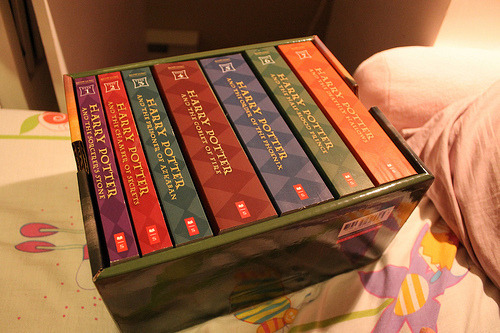
When someone tells me that they've never read Harry Potter, I always urge
them to pick up all seven books.
They
have changed my life so much and I always want other people to experience the
story of the boy who lived!
I always
seem to find a few people who only know Harry Potter from the media and not
from reading the books.
This summer I
got into a heated discussion with a friend of mine about the books and told her
she had to read them.
She had some
reservations and her points were very understandable.
Before I go into the heart of this blog post,
I want to give two points my friend stated against Harry Potter and then I will
explain to you why these points are meaningless when it comes to judging a
credible book or series.
The first point that was made is this –
I don’t believe in wizardry.
Indeed this statement has been expanded by
the media and can be seen as a legitimate reason.
However, if we are going to not read
something because we don’t believe in it than I guess I give up all murder mysteries
and anything to do with rape because I believe murder and rape are wrong.
See my point?
If Harry Potter was enforcing wizardry than I’d say not to read it and I
probably wouldn’t be such a fan of the books myself; but it’s not forcing
anyone to be a wizard.
In fact, I
honestly can claim that this series isn’t truly about wizards at all.
Harry Potter is a fantasy tale and just like
the fantasy and fairy tales before it, the story uses a mythical group to
portray the habits and morals of our own society.
Bambi teaches kids that if you can’t say
something nice, don’t say anything at all.
It isn’t telling us that we must become rabbits or deer or live in a
forest.
The second point made is this –
Isn’t it a bit childish? Its main characters are kids.
While the Harry Potter books appeal to the
young, they also appeal to all age groups.
When I was 17 waiting in line to receive my copy of the final book,
there were adults in line with me discussing the books and discussing what may
happen in the final one.
The book isn’t
about children but rather about childhood.
It is a story of growing up.
The
books grow as Harry grows.
As Harry
becomes more complex, so does his life at Hogwarts and so does J.K. Rowling’s
writing.
In order to judge Harry Potter
in full, one must read all of the books.
Reading the first one is like reading the first part of a novel and
putting it down before discovering all of the other parts.
Harry Potter works like a puzzle and by the
end, all of the pieces fit.
Another
point I may add is this – saying Harry Potter is a childish book series because
its main characters are kids is a big statement to make.
Haven’t we seen many other literary works
suitable for adults that contain children as the main character?
To name a few
- The Lovely Bones, To Kill A Mockingbird, The Curious Incident of the
Dog in the Nighttime, The Kite Runner, The Reader, My Sister’s Keeper,
etc.
The statement is almost suggesting
that for a novel to be adult it must contain continual vulgar language, sex,
and adult main characters.
This isn’t
always true.
C.S. Lewis says, “No book
is really worth reading at the age of ten which is not equally – and often far
more – worth reading at the age of fifty and beyond.”
Now let’s quote Stephen King, for King is a huge fan of the Harry Potter
books, just to get an author’s perspectives on these books.
He says, “Will kids (and adults as well)
still be wild about Harry 100 years from now, or 200?
My best guess is that he will indeed stand
time’s test and wind up on a shelf where only the best are kept; I think Harry
will take his place with Alice, Huck, Frodo, and Dorothy, and this is one
series not just for the decade, but for the ages.”
Not only does Harry Potter resemble past
fantasy tales but the series also seems to be a pre-Dickens type.
In a recent blog post by
Jeff
Hanna, Hanna states that many students were struggling to read Dickens’s
writing and this was becoming a concern considering Dickens’s is one of the
easiest, apart from Jane Austen, Victorian authors.
“Reading Harry Potter,” Hanna quotes Suzanne
Keen, “is like taking a crash course in reading Dickens because ‘it's got the
humor, it's got the caricatured names, it's got the multi-plots, it's got the
really long stories that you read for hours and hours and hours, and you enjoy
the fact that they're long.’”
In this
blog I am going to present themes that are featured in the Harry Potter series and
use examples, but I am going to write in a way that hopefully won’t give away
too much information about the series as I want anyone who hasn’t read the
books to read them!
Let’s get started!
The first theme I am going to discuss in this blog is the theme of
death.
Death is probably the biggest
theme in the novels mostly because it has to do with what made Harry famous and
what sets him apart from other wizards.
This theme can be split into two sections, one being the dead remain with
us and the other being literal death.
I
quote the third film, “The ones that love us never really leave us.”
Harry experiences death as a baby but never
really understands it while he grows up until he finds out he is a wizard.
Harry’s parents murder lives with him
everyday just as his parents live within him and around him everyday.
Harry’s looks alone reflect his mother and
father.
The books continually remind us
that Harry has his mother’s eyes and his father’s messy jet black hair.
His parents also are reflected through his
actions.
Harry shows a great deal of
love which reflects his mother, and he doesn’t always abide by the rules but is
a great Quidditch seeker like his father.
Even Harry’s patronus is exactly the same as his father’s, showing that
James (Harry’s dad) is as much alive in Harry as ever.
Harry also encounters many friends and
professors who knew his parents while they were alive and the stories they tell
him keep his parents alive in spirit.
Harry
sees a lot of his parents through pictures given/shown to him, memories from
the enchanted Penseive, and letters he comes upon. He sees his parents in the
Mirror of Erised and finds himself emotionally attached to the object just so
he can be with his family that will never exist.
At one point in the books, Harry comes upon
their graves; “
the
last of Lily and James lay, bones now, surely, or dust, not knowing or caring
that their living son stood so near, his heart still beating, alive because of
their sacrifice and close to wishing, at
this moment, that he was sleeping under the snow with
them.” Literal
death is very prevalent in these books as well.
Many characters who Harry becomes close with end up dying and we as
readers see the toll it takes on Harry’s emotional state throughout the
novels. The entire plot of this story
literally revolves around two things: the night Harry’s parents died and
Voldemort’s fear of death.

The next theme I want to look at is the theme of alienation/humility. The death of Harry’s parents and the story of
his survival and his scar set him apart even in the wizarding world. Harry is constantly alienated in these books
and it often leaves him feeling isolated and frustrated. He is alienated in the Chamber of Secrets
when people suspect him of murder, in the Goblet of Fire when people
suspect he is a cheating dark wizard who is conceited, and in the Order of
the Phoenix when the wizarding world claims that he is a liar. Harry is also very alienated during his
childhood living with the Dursley’s.
Harry feels most isolated during the summer months he has to spend away
from Hogwarts and at his aunt and uncle’s because the wizarding world is going
on without him and he is too far away to enjoy it or sometimes know what’s
going on that effects his life. His scar
keeps him isolated because he has to live with the rumors and the pain and the
spotlight that he doesn’t want. Death
sets him apart from others especially when Harry can see thestrals when mostly
no one else can. Harry isn’t the only
one who feels isolated and alienated.
Even his best friend Ron experiences isolation and alienation at some
points in the books. This alienation,
though, helps Harry humble himself. He
knows he hasn’t asked to be in this rather unique position but he accepts it
anyway. He accepts his destiny to help
the wizarding world rather than running away from it out of fear to protect
himself. Harry shows his modesty most
prominently when he is meeting with other students in the beginning’s of
Dumbledore’s Army. All of his friends
are naming the incredible things Harry has done but Harry tells them that he
gives all his credit to luck. He strides
to do good even when it may not benefit himself. The biggest example is in the first book with
the Sorcerer’s Stone. Harry never lets
fear hold him back.
Which brings me to the next theme of the books:
Fear. "Fear of a
name increases fear of a thing itself,” Dumbledore tells us at one point during
the books when referring the a wizards fear of speaking Voldemort’s name.
Yes, fear is a very powerful theme in the
Harry Potter books.
It is revealed to
the reader that Harry’s biggest fear is fear itself.
He learns to conquer this fear which shows
his true strength and determination as a character and as a hero.
Fear is also represented in these books
through the magical creatures called boggarts which transform into what a
certain person fears the most.
Characters
such as Cornelius Fudge and Professor Slughorn represent a large amount of fear
during the books.
Even unknown witches
and wizards show fear during the books when the wizarding war occurs.
Wizards give into the fear of dying when
Voldemort comes to kill them for information or just some fun.
Voldemort himself, as I stated above, fears
death above anything else and it proves to be his greatest weakness.
I guess the theme of fear actually should be
altered to be conquering fears because this series encourages standing up for
what you believe and doing what you think is right despite fear.
On a different subject now, another theme featured in Harry Potter is the
theme of Father Figures, Family, and Love.
Harry basically grows up with blood relatives who despise him and then
he enters a world of people who love and accept him not just because of his
famous status and his scar.
Many men in
the story play the role of father figure in Harry’s life such as Hagrid,
Dumbledore, Professor Lupin, and a certain someone who is nicknamed Snuffles.
These father figures all have unique
attributes to them that overall shape and influence Harry during his years at
Hogwarts and basically help mold him into the man he becomes.
The role of family in these stories is
another big theme.
Harry Potter makes it
clear that family isn’t just defined as having a mom and a dad but rather it is
defined as being surrounded by people who genuinely love and care about
you.
In Harry’s case, the Weasley’s are
his family as well as many of the Hogwarts professors and members of the
order.
Mrs. Weasley is always giving to
Harry like she gives to her own children and treats him like one of her own
sons.
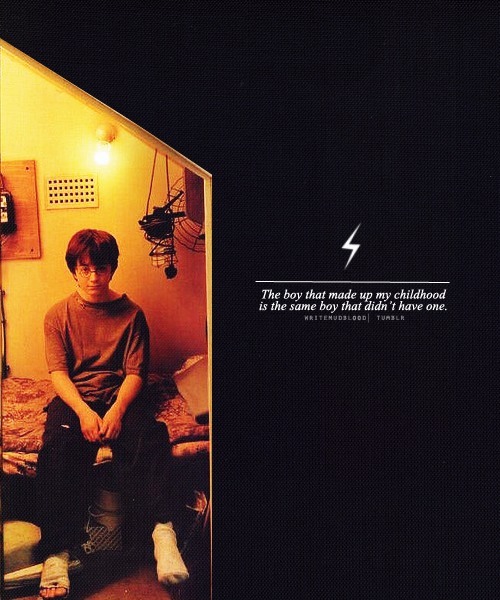
The graphic featured to the right
is one that can draw speculation to Harry’s childhood.
In Western culture childhood has a definition
but no one usually thinks about it because it is just apart of life.
Questioning the definition of childhood today
is like questioning why we eat cereal for breakfast instead of macaroni and
cheese.
It can easily be argued that
Harry did have a childhood and that it was good in the sense that it humbled
him.
It was a childhood, just not the
one we read in the definition or the one that most of us have experienced.
Love surrounds Harry all of the time in the
wizarding world (as much as hate) and is probably one of the best known themes
in the books.
We see love in the form of
romance and love in its invisible form that saved Harry’s life the night
Voldemort gave Harry his scar.
His
mother’s love runs in his veins and is what sets him apart from Voldemort.
This next point I am going to make carries a few themes but ultimately
proves this: that this book is packed with three dementional characters.
Emma Watson once said in an
interview,
“What I love about J.K. Rowling’s books is that no one is ever painted
completely black or white apart from Voldemort.”
Indeed Watson is right on the money with this
statement.
The characters in Harry
Potter have so much depth to them and they all have a story, even if they are
only minor characters.
Each character
brings a theme of the fallen façade as well as redemption and forgiveness.
We see these themes in characters like
Neville, Snape, Lupin, Ron, Draco, and many others.
This theme of fallen façade also occurs when
looking at the Hogwarts houses.
I’m not
sure who said this quote but it is very important to remember when reading the
books.
“Not all Gryffindors are brave,
not all Hufflepuffs are weak, not all Ravenclaws are stuck up and arrogant and
not all Slytherins are dark wizards.”
If
you’ve read the books I think it is safe to say that each of these statements
represents a single character and you know who they are.
The only character that stays the same, as
Watson pointed out, is Voldemort who is always seeking power and a way to
conquer death.
Looking at all of these themes together, another theme comes to mind: the
theme of wisdom.
These books are packed
with wisdom!
Dumbledore says, "To
the well organized mind, death is but the next great adventure,” and, "It
is our choices, Harry, that show what we truly are, far more than our abilities,”
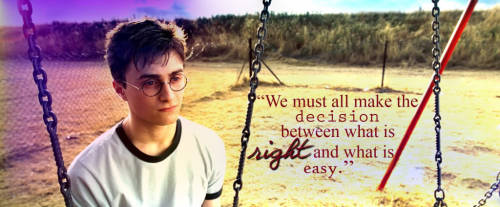
and, “We all must make the decision between what is right and what is easy,”
and, "“Do not pity the dead, Harry. Pity the living, and, above all, those who live
without love," and, "“Of course it is happening inside your head, Harry, but why on earth should that
mean that it is not real?”" AND, “it matters not what someone is born, but what they grow to be!”
There are lots of other quotes I love said by
Dumbledore and many other characters but those are some of my favorites.
The books continually give the reader time to
reflect upon their own lives as Harry reflects on his life, and the characters
teach wisdom through their actions.
One last topic of discussion I want to touch on is actually a question.
Where is God in Harry Potter?
Faith in the Harry Potter books is one of the
reasons why I love Harry Potter.
I see
so many biblical references (intentional or not) and the books have helped
guide me as a follower of Jesus.
To
start off, the idea of humility (something bigger than ourselves) is a huge
attribute when talking about being a follower of Jesus.
Another is patience which we see represented
through the interaction of Dumbledore and Harry.
Harry doesn’t always understand Dumbledore’s
decisions because of his own preconceived ideas, but he trusts them anyway and
that is another thing we need to remember – to trust God because He has more
wisdom than we do.
Poet Jeff Bethke once
said in an
interview
when asked if he didn’t agree with some passages in the bible, “This is
what it comes down to, I’ve noticed.
Is
that, they’re still things I wrestle with [in the bible] and still things that
if I were to say I’m God, I wouldn’t do it that way – which of course is the
most arrogant thing you could ever say…we don’t have people putting the word of
God above them and humbly submitting in hopes that they would ask the Holy
Spirit to open their mind every time they read the scriptures and just reveal
truth.
Instead we have people putting
the bible below them and saying ‘I’m going to force my worldview that I already
have into this book.’”
Of course I’m not
saying that I would put Harry Potter before the bible however I do feel Harry
Potter can teach us these lessons of what it means to be a follower of
Christ.
As I said above, Dumbledore is
constantly doing things that Harry is very confused about and struggles with
and he even gets angry with Dumbledore sometimes yet in the end, he always
trusts him and that is the way we need to live.
Yes there are times we will get angry with God but we can’t let our
anger lead us down an easier path but we need to trust God because he may just
have more wisdom than we do.
Another
huge link to faith in these books is seeing Harry as a Jesus figure as well as
Dumbledore as a godly figure.
To conclude, Harry Potter is more than the media has made it out to be.
It isn’t simply some children’s story about
getting bad grades or missing a homework assignment or having a crush but
rather it is about courage and facing our fears; learning to love and to be
humble, and to never judge a book by it’s cover!


 Now that we have a back-story to this novel, let's go into what it is about. Coffeehouse Theology explores the role of theology in the modern world. Cyzewski defines postmodernism and discusses how traveling and learning about other cultures can help us see different theological practices that we may not agree with but can help us better to understand our own faith. In this way, we can strengthen our faith. The book talks about how much information is at our fingertips these days and with all of that information, it is important to remember that even though this world is full of different cultures and beliefs, we can learn from it all and that we are all united as Christians with the love for God. Cyzewski says, "The main thing worth knowing is how to love God and to build people up through love." The book also stresses the importance of reading the bible and not letting all of the information at the tip of our fingers distract us from what the bible says. This book forces us to think and reflect on God in our everyday lives.




 expecting
to enjoy the class but, to my surprise, I had a good experience! One
of the books we read is by an unknown author named Amma Darko. The book
is Faceless. The story revolves around two main characters
from two very different parts of Accra (the capital of Ghana), Fofo and
Kabria. Fofo lives on the streets. Her mother won't leave her house and
believes she is cursed. The curse, she believes, is the reason she is
poor and without a husband. Kabria is a mother and wife and rescues
Fofo from the streets. Throughout the novel, Kabria and her co-workers
look to try and solve the murder mystery of Baby T (Fofo's sister) while
also trying solve the issue of why young girls are forced to live their
lives in fear on the streets of Accra.
expecting
to enjoy the class but, to my surprise, I had a good experience! One
of the books we read is by an unknown author named Amma Darko. The book
is Faceless. The story revolves around two main characters
from two very different parts of Accra (the capital of Ghana), Fofo and
Kabria. Fofo lives on the streets. Her mother won't leave her house and
believes she is cursed. The curse, she believes, is the reason she is
poor and without a husband. Kabria is a mother and wife and rescues
Fofo from the streets. Throughout the novel, Kabria and her co-workers
look to try and solve the murder mystery of Baby T (Fofo's sister) while
also trying solve the issue of why young girls are forced to live their
lives in fear on the streets of Accra.  Amma
Darko is a very good writer. Her writing style was unique and new for
me and I enjoyed it very much. I also enjoyed the story. There are too
many people in this world who face poverty and homelessness and this
book does its best to try and find a solution. Faceless was
unlike any book I've ever read and while I liked the story, I found
myself becoming bored at times and wanting to put the book down. The
story dragged on and I couldn't wait to be finished the book.
Amma
Darko is a very good writer. Her writing style was unique and new for
me and I enjoyed it very much. I also enjoyed the story. There are too
many people in this world who face poverty and homelessness and this
book does its best to try and find a solution. Faceless was
unlike any book I've ever read and while I liked the story, I found
myself becoming bored at times and wanting to put the book down. The
story dragged on and I couldn't wait to be finished the book.